10 Best AI Mental Health Tools to Support Stress, Anxiety & Emotional Well-being (2026 Guide)
Explore the top AI mental health tools that support emotional well-being through CBT, mindfulness, journaling, and guided conversations. Compare features, pricing, and use cases to find the right tool for stress, anxiety, and daily mental wellness.

AI tools are changing how people care for their mental health. They give users support at any time of the day through mood tracking, daily check-ins, guided breathing, journaling, and simple coping exercises.
Many of these tools use trusted methods like cognitive behavioral therapy (CBT) and mindfulness to help people manage stress, anxiety, and negative thoughts. They are not a replacement for trained therapists, but they can make support easier to access and more affordable.
They also help reduce the fear of asking for help.As these tools improve, they can offer more personalized, safer, and more effective mental health support while helping users build healthier daily habits.
AI Mental Health Tools Comparison
| Tool | Best For | Key Features | Pricing Level | Drawbacks |
|---|---|---|---|---|
| Woebot | Stress, anxiety, daily emotional check-ins | CBT-based chatbot, mood tracking, journaling, 24/7 support | Free / App-based pricing | Not for emergencies, scripted responses |
| Wysa | Self-help for stress & anxiety | CBT + mindfulness exercises, mood tracking, AI penguin chatbot | Freemium / Subscription | Can feel repetitive, limited clinical depth |
| Sonia | Therapy-style guided CBT support | Voice/text CBT sessions, structured “homework”, mood tracking | Low-cost subscription | Not licensed therapy, limited crisis handling |
| Yuna | Everyday emotional coaching | CBT coaching, breathing exercises, mood tracking, secure chats | Subscription | Not for severe clinical conditions |
| Moodfit | Mental fitness & habit tracking | Mood logs, CBT tools, sleep/exercise tracking, charts & insights | Freemium / Paid | Busy interface, premium features locked |
| Headspace | Mindfulness, sleep & stress relief | AI companion Ebb, meditation, sleep tools, guided mindfulness | Paid subscription | Not clinical therapy replacement |
| Calm | Sleep, relaxation & stress reduction | Sleep stories, meditation, breathing tools, AI recommendations | Subscription | Can feel generic for deep issues |
| InfiHeal | Accessible multilingual mental health support | CBT, DBT, mindfulness, therapist access, mood tracking | ₹99–₹999/month | Limited clinical depth for emergencies |
| Berries AI | Therapists & clinicians (clinical documentation) | AI clinical notes, SOAP/DAP formats, ICD-10 suggestions | Freemium / Trial | Limited native integrations, workflow reliance on copy-paste |
| Ensora Health | Mental health practice management | EHR, billing, scheduling, AI session notes, telehealth | Enterprise pricing | AI features limited to higher tiers |
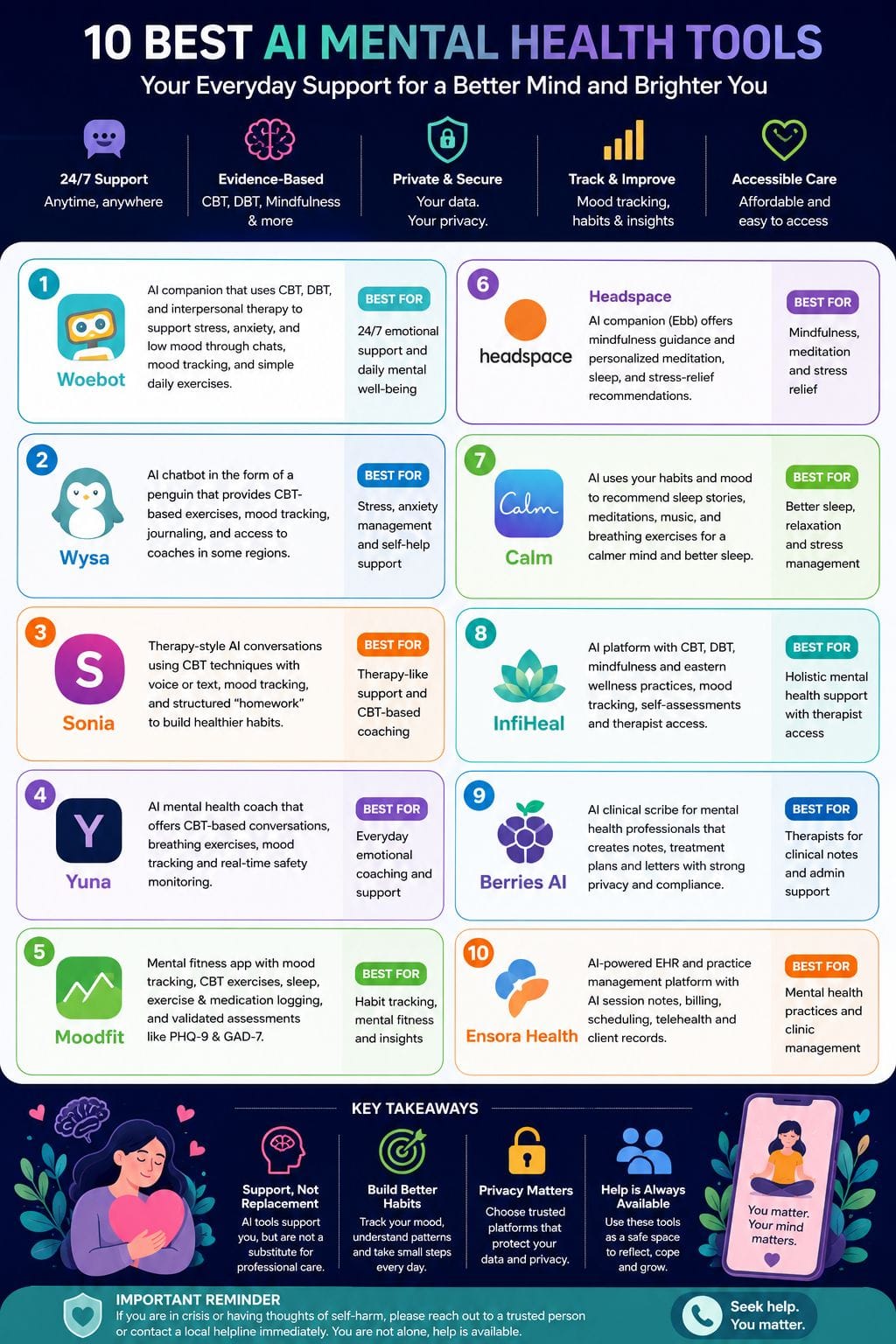
Woebot
Woebot is an AI mental health companion that offers friendly, round-the-clock support for stress, anxiety, and low mood. It checks in with users, tracks their mood, and encourages simple daily habits like gratitude journaling and mindfulness.
Drawing from proven methods such as CBT, DBT, and interpersonal therapy, it shares short lessons and practical exercises that are easy to follow. Using natural language processing, Woebot understands what users say and guides them to the most helpful tools and conversations.
It can also spot language that may signal a crisis and direct users to emergency or helpline resources.
Pros
- Always on, with instant replies and no waiting list
- Research-backed content with clinical trials and evidence of reduced symptoms for some users
- Many users report feeling a strong bond and finding the chat style warm and engaging
Cons
- Not designed for crisis care and does not provide live intervention in emergencies
- Responses follow set scripts, so complex or unusual issues may feel missed
Pricing
| Plan | Pricing |
|---|---|
| App Access | Free / Check App Store for latest pricing |
Wysa
Wysa is an AI-powered mental health app that helps people deal with stress, anxiety, and low mood. It offers a friendly chatbot in the form of a penguin that is available anytime to listen, guide, and help users reflect on their feelings.
The app also includes over 200 self-help exercises based on CBT and mindfulness for better sleep, emotional balance, and stress relief. Users can track their mood, write journal entries, and notice patterns over time.
In some regions, Wysa also offers access to human coaches and therapists. It detects signs of a crisis.
Pros
- Very low-friction, anonymous entry point into mental health support
- Short, guided exercises make daily use easy to stick with
- Evidence-based methods (CBT, DBT, mindfulness) built into tools and paths
Cons
- AI sometimes misreads context or gives repetitive replies, which can feel canned
- Not designed for diagnosis, severe crises, or complex clinical needs
Pricing
| Plan | Pricing |
|---|---|
| Free Plan | Free (basic chatbot + exercises) |
| Premium Plan | Subscription (varies by region) |
Sonia
Sonia is an AI mental health tool that offers therapy‑style chats using cognitive behavioral techniques to help with stress, anxiety, and low mood through voice or text.
It runs 24/7 on an iOS app, gives structured sessions plus quick check‑ins, tracks mood, and suggests simple “homework” to build better habits over time. Sessions feel like talking to a coach that listens, asks follow‑ups, and guides you to reframe thoughts instead of just giving tips.
Sonia is built to be far cheaper than classic therapy and to cut wait times, stigma, and travel
Pros
- Very low‑cost, always‑on support that can fill gaps between or before human therapy
- Voice or text mode makes it easy to use in private or on the go
- Structured CBT flows with mood tracking and homework build real skills over time
Cons
- Not a licensed therapist and not approved as a medical device, so care is limited
- Crisis support is routed to hotlines rather than handled in‑app
Pricing
| Plan | Pricing |
|---|---|
| App Subscription | Low-cost monthly subscription (varies by platform) |
 Vivek Dev Jacob
Yuna
Yuna is an AI mental health coach that helps you manage stress, anxiety, and everyday emotional challenges. It offers calm, supportive conversations based on cognitive behavioral techniques to help you understand your thoughts, shift unhelpful thinking, and build better habits over time.
You can chat anytime, track your mood, and use simple breathing, grounding, and reflection exercises whenever you need them. The platform was developed with input from clinical psychologists to make mental wellness support more accessible and affordable.
Yuna also puts privacy first, using encryption and secure data practices so your conversations stay confidential and protected.
Pros
- Always-on companion, so you can check in any time without waiting for an appointment
- Designed and informed by clinical psychology research for more structured, evidence-based support
- Real-time safety monitoring that can flag risk and connect you to human help when needed
Cons
- Not a licensed therapist and cannot fully replace human clinical care, especially in crises
- Subscription model may still be a barrier for some users even if cheaper than therapy
Pricing
| Plan | Pricing |
|---|---|
| App Access | Free / Check App Store for latest pricing |
Moodfit
Moodfit is a mental fitness app that helps you build healthy habits and take better care of your mind. You can track your mood, write short journal entries, and notice patterns that affect how you feel.
The app includes CBT exercises, breathing techniques, mindfulness sessions, and gratitude prompts that are easy to complete each day. You can also log your sleep, exercise, and medication to see how they influence your mood over time with simple charts.
It also offers trusted anxiety and depression assessments, making it a useful tool to support your mental well-being between therapy sessions.
Pros
- Strong insights into how sleep, exercise, and habits affect mood over time
- Uses validated assessments like PHQ-9 and GAD-7 to track depression and anxiety
- Flexible daily goals system that feels like a simple mental health workout plan
Cons
- Interface and setup can feel busy for people who want a very simple, single-focus app
- Best features, including full content and some tools, sit behind a paid subscription
Pricing
Request for Pricing (RFP)
Headspace
Headspace uses AI to help you slow down, reflect, and feel more in control of your day. Its AI companion, Ebb, listens as you type about your thoughts or feelings and responds with gentle guidance.
Based on your mood, it suggests meditations, breathing exercises, sleep tools, or mindfulness sessions that fit your needs. These short check-ins can help reduce stress, improve sleep, and build healthy daily habits.
The system was designed with guidance from mental health experts and includes safety features for people in distress. It supports your well-being but does not diagnose conditions or replace professional therapy.
Pros
- Strong focus on competitor insights for online sellers
- Helpful for both B2C and B2B scenarios
- Reduces manual spreadsheet work on pricing
Cons
- Very easy to use, even when you feel low or tired
- Blends human-made content with AI guidance for more relevant sessions
Pricing
| Plan | Pricing |
|---|---|
| Monthly Plan | $12.99/month |
| Annual Plan | Discounted yearly pricing (varies by region) |
Tripti Agarwal
Calm
Calm uses AI to create a more personal way to relax, sleep better, and manage stress. It learns from your listening habits, daily mood, and wellness goals to recommend meditations, sleep stories, music, and breathing exercises that match your needs.
The app also offers simple check-ins and gentle reminders that encourage you to take short breaks before stress builds up. Over time, these suggestions can help you build healthy routines that fit even a busy schedule.
Calm is designed to support everyday mental wellness. It is not meant for emergencies and works best alongside healthy habits.
Pros
- Strong, polished library for sleep, focus, and stress relief
- AI suggestions reduce choice overload and help form steady habits
- Suits beginners with simple, short sessions and clear guidance
Cons
- Not a replacement for therapy or crisis care
- May feel generic if you need deep, clinical-level mental health support
Pricing
Check Appstore/Play Store for pricing
InfiHeal
InfiHeal is an AI-powered mental health platform that helps people manage stress, anxiety, and emotional challenges through private, round-the-clock support. Its AI companion, Healo, offers a safe space to talk, reflect, and build healthy coping habits.
The platform combines proven methods such as CBT, DBT, mindfulness, and eastern wellness practices with guided exercises, mood tracking, and self-assessments. Users can also connect with qualified therapists whenever they need professional care.
With multilingual support and culturally relevant guidance, InfiHeal makes mental health care more accessible, affordable, and free from stigma for both individuals and organizations.
Pros
- Easy setup and simple interface for quick onboarding
- Multi-channel support and API for major ecommerce platforms
- Budget-friendly for small and mid-sized brands that are new to pricing optimisation.
Cons
- 24/7 anonymous support that lowers stigma and entry barriers to care
- Hyper-personalized pathways that blend AI insights with human therapy options
Pricing
| Plan | Pricing |
|---|---|
| Trial Plan | ₹99/month |
| Standard Plan | ₹349/month |
| Advanced Plan | ₹999/month |
Berries AI
Berries AI is an AI-powered clinical scribe made for mental health professionals. It listens to therapy sessions, whether in person or online, and turns them into clear clinical notes, treatment plans, and patient letters.
It supports common note formats like SOAP and DAP, suggests ICD-10 diagnoses, and helps with psychiatry-specific tasks such as risk and safety assessments. All data is protected with strong encryption and complies with HIPAA, PHIPA, and SOC 2 standards.
Audio recordings are deleted after notes are approved. Berries works with any EHR through simple copy and paste and also includes an AI assistant for summaries, letters, and patient homework.
Pros
- Built only for mental health, with templates and flows that match therapy and psychiatry work
- Strong focus on compliance, including HIPAA, PHIPA, SOC 2, and automatic BAA coverage
- Free tier or generous trial lets low-volume or early-career clinicians test it in real practice
Cons
- Public details mention limited or no native EHR integrations; workflows rely on copy and paste
- No clearly documented mobile app or offline capture for all devices at the time of review
Pricing
Check Appstore/Play Store for pricing
Shubham Kumar
Ensora Health
Ensora Health helps mental health practices spend less time on paperwork and more time with clients. Its AI tools support daily tasks like note-taking, billing, scheduling, and documentation while leaving all clinical decisions to the therapist.
The AI can improve progress notes by suggesting clearer wording, better structure, and mental health–specific language without changing the therapist's judgment. The platform also includes an AI Session Assistant that creates draft notes from recorded sessions for review.
Built on a cloud-based EHR, it combines telehealth, e-prescribing, secure client records, and practice management tools, making it easy for both solo therapists.
Pros
- Designed specifically for mental and behavioral health workflows, not generic healthcare
- AI is framed as assistive, preserving therapist control and clinical judgment over final notes
- All-in-one suite reduces the need for multiple tools for EHR, billing, and telehealth
Cons
- AI documentation features are locked to the top-tier plan, raising costs for smaller practices
- Essentials and mid-tier plans lack AI notes, so not all users benefit from the AI layer
Pricing
Request for Pricing (RFP)
How to Choose the Right AI Mental Health Tool
Choosing the right AI mental health tool depends on your personal needs, comfort level, and support goals. Some tools are designed for daily emotional check-ins, while others focus on meditation, therapy-style conversations, or clinical support for professionals.
- If you want simple stress relief and mindfulness, apps like Calm and Headspace work well.
- For structured CBT-based support and journaling, Woebot, Wysa, and Moodfit are better suited.
- If you need therapy-style guidance, Sonia and Yuna provide more conversational coaching.
- For professionals, tools like Berries AI and Ensora Health focus on documentation and practice management rather than user-facing mental health support.
It is also important to remember that these tools are not replacements for licensed therapists in serious or crisis situations. The best approach is to use them as supportive companions alongside professional care when needed.
Final Thoughts
AI tools for mental health are not a magic fix, but they are a real step toward care that feels closer, kinder, and easier to reach. They help people notice their mood, spot patterns, and act before a small dip becomes a deep fall.
They can guide breathing, offer coping tips, and keep a quiet, steady space for reflection when human help is not nearby. Used with care and clear limits, they can support therapists, not replace them.
The future of mental health will blend human wisdom with smart, gentle machines that keep more people from slipping.
FAQs
Are AI mental health tools a replacement for therapists?
No. AI mental health tools can support stress management and daily emotional well-being, but they are not a replacement for licensed therapists, especially in serious or crisis situations.
How do AI mental health apps work?
They use techniques like CBT, mindfulness, and NLP to offer guided conversations, mood tracking, journaling, and coping exercises based on user input.
Are AI mental health tools safe to use?
Most reputable apps use privacy protection, encryption, and safety filters. However, users should avoid sharing highly sensitive information and use trusted platforms only.
Which AI mental health tool is best for beginners?
Apps like Calm, Headspace, and Wysa are often best for beginners because they offer simple interfaces, guided exercises, and easy daily check-ins.