Best AI Patient Engagement Software Solutions in 2026
Discover the best AI patient engagement platforms for hospitals and clinics in 2026. Compare features, pricing, pros, cons, and healthcare automation tools for better patient communication.

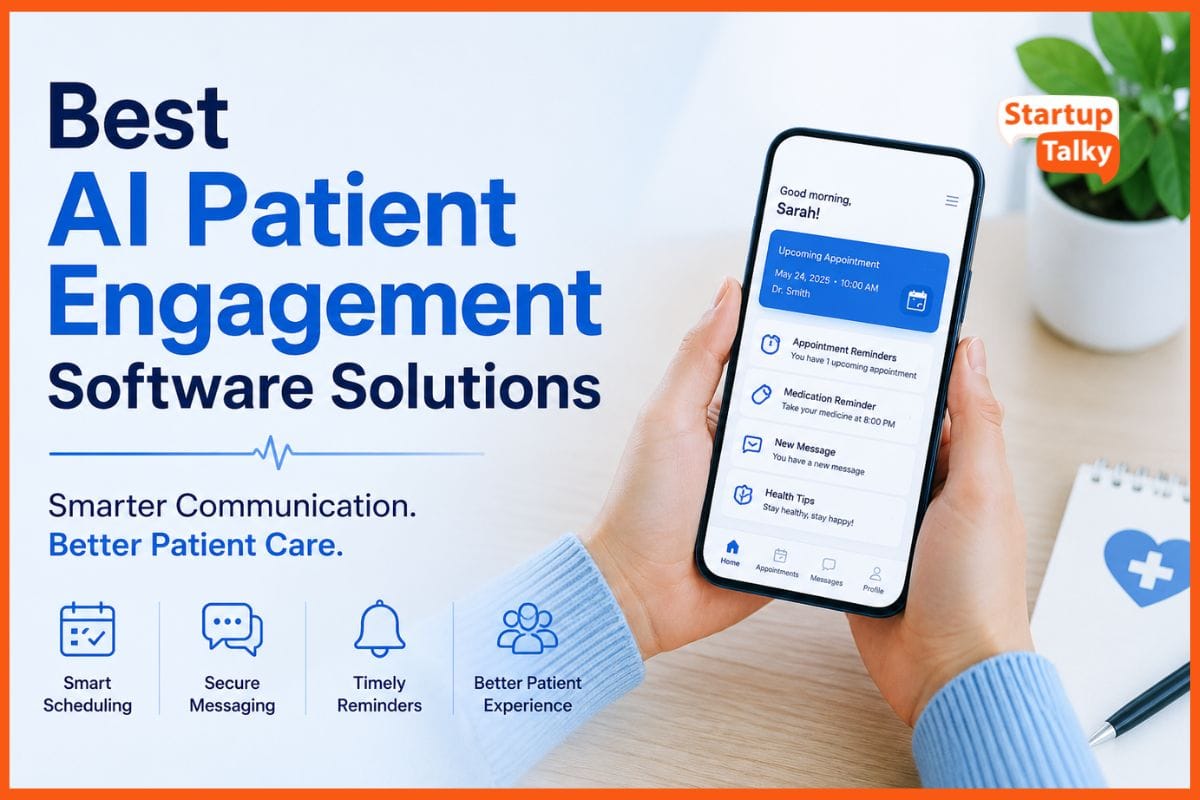
AI patient engagement platforms help patients stay informed and connected. They use smart chat, reminders, and automated messages to guide people through care in a simple and friendly way. These tools use patient data to send personal updates, appointment reminders, medication alerts, and follow-up messages.
Modern AI healthcare engagement software also offers:
- 24/7 appointment scheduling
- Basic symptom triage
- Secure messaging
- Multilingual communication
- Automated follow-ups
- Workflow integrations with EHR and EMR systems
By handling routine tasks, they reduce work for healthcare staff and give doctors more time to focus on patients. Analytics help healthcare teams track engagement and find care gaps. This improves patient experience and lowers missed appointments.
In this article, we look at some of the best AI patient engagement software platforms for hospitals, clinics, and healthcare organizations in 2026.
Quick Comparison of the Best AI Patient Engagement Platforms
| Platform | Best For | Key Features | Pricing Level | Drawbacks |
|---|---|---|---|---|
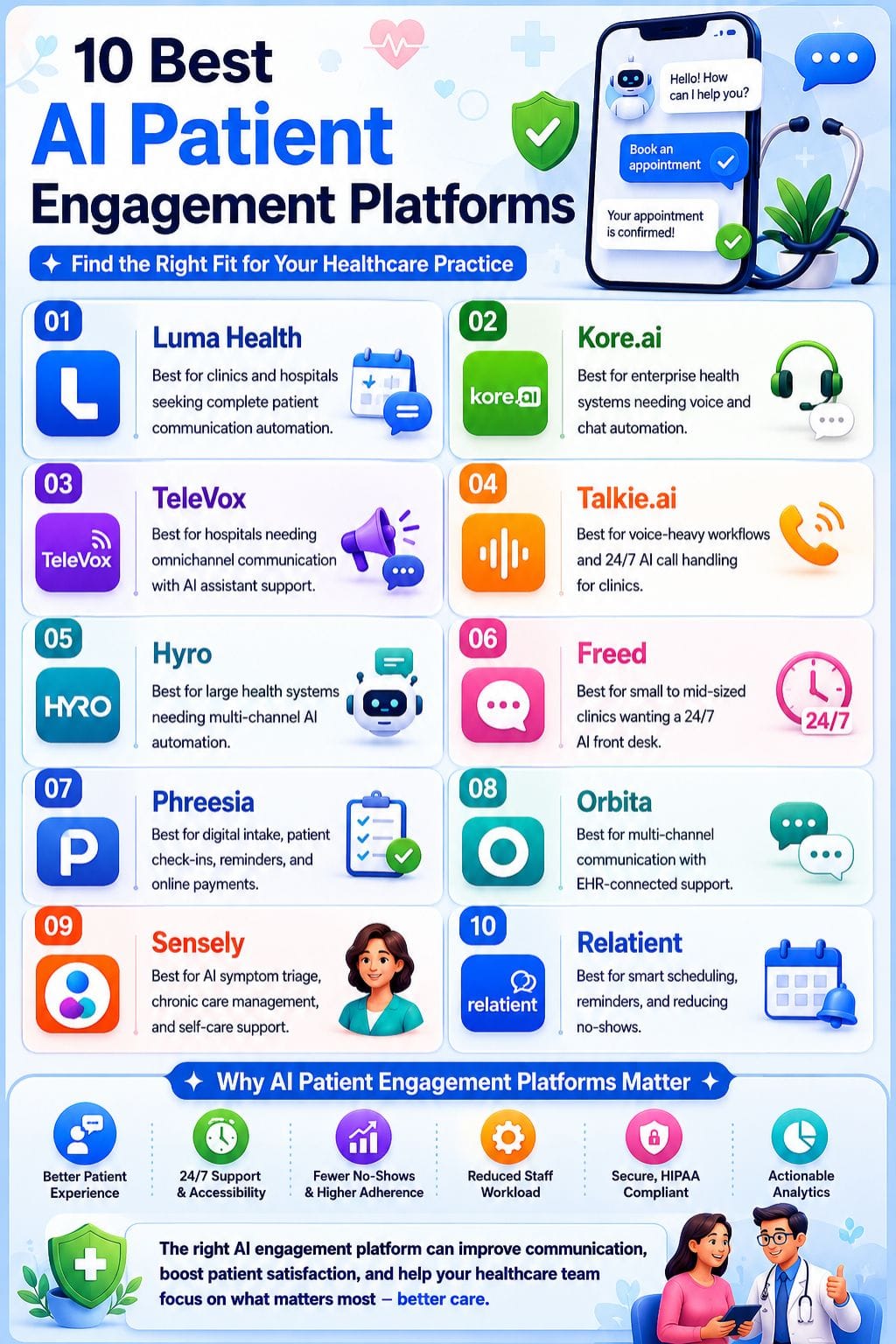
| Luma Health | Large clinics & hospitals | Scheduling, reminders, EHR chatbot, multilingual messaging | Custom Pricing | Complex setup for small teams |
| Kore.ai | Enterprise healthcare systems | Voice & chat automation, symptom checks, billing support | Custom Pricing | Heavy for smaller clinics |
| TeleVox | Hospitals needing omnichannel communication | Voice, SMS, AI assistant, reminders, analytics | Custom Pricing | Steep learning curve |
| Talkie.ai | Voice-heavy healthcare workflows | AI voice agents, refill requests, multilingual calls | Custom Pricing | Limited all-in-one engagement tools |
| Hyro | Large health systems | Voice/chat/SMS automation, Epic integration, smart routing | Custom Pricing | Requires integration setup |
| Freed | Small to medium clinics | 24/7 front desk AI, shared inbox, SMS workflows | Custom Pricing | Occasional glitches reported |
| Phreesia | Digital intake & patient check-ins | Forms, reminders, payments, EHR integrations | Custom Pricing | Can feel complex for smaller teams |
| Orbita | Multi-channel patient communication | Chat, SMS, voice, reminders, EHR support | Custom Pricing | Support delays reported |
| Sensely | AI symptom triage & chronic care | Avatar AI, multilingual support, risk assessment | Custom Pricing | Smaller review footprint |
| Relatient | Scheduling & no-show reduction | Smart scheduling, reminders, messaging | Custom Pricing | Limited analytics depth |
Luma Health
Luma Health helps clinics and hospitals improve patient care with AI-powered communication tools. The platform makes it easy for patients to book visits, get reminders, fill out forms, and stay connected with care teams.
It supports two-way texting, secure chat, and self-service options in many languages. Luma Health also helps staff manage schedules, waitlists, and follow-ups with less manual work.
Patients can ask questions, request prescription refills, and complete intake tasks through an EHR-connected chatbot. By automating routine tasks, the platform saves time for healthcare teams and creates a smoother experience for patients from the first visit.
Pros
- Strong automation for busy practices
- Broad EHR integration support
- Good for reducing call volume and missed appointments
Cons
- Setup can be complex for smaller teams
- Feature depth may feel heavier than needed for simple use cases
Kore.ai
Kore.ai helps hospitals and health systems improve patient communication with AI-powered voice and chat support. Patients can use it across more than 40 channels, any time of day.
The platform helps automate tasks like booking appointments, checking symptoms, sending reminders, answering billing questions, and handling follow-ups. It also connects with EHR and EMR systems, which makes care access smoother for both patients and staff.
Hospitals can collect structured patient data, trigger workflows, and reduce pressure on call centers. Its multilingual support also helps providers serve a wider range of patients with faster and more reliable service.
Pros
- Handles patient engagement across voice and digital channels
- Supports scheduling, cancellations, reminders, and routine care tasks
- Integrates with healthcare systems and can automate downstream workflows
Cons
- Best fit is usually larger healthcare organizations, so it may feel heavy for small clinics
- Setup and integration can take time because the platform is built for enterprise workflows
TeleVox
TeleVox is an AI-powered patient engagement platform that helps clinics and hospitals improve communication with patients. It automates appointment reminders, follow-ups, and scheduling through voice calls, text messages, and web chat.
Its AI assistant, Iris, supports patients 24/7 by answering questions, managing appointments, and sending updates. The platform works with EHR and phone systems, which helps reduce staff workload and patient no-shows. TeleVox also offers multilingual support, two-way messaging, and analytics tools.
These features help healthcare providers keep patients informed, improve care access, and create a smoother patient experience.
Pros
- Strong omnichannel reach (voice, SMS, web chat) tightly aligned with hospital and health‑system workflows.
- AI‑enabled virtual assistant (Iris) delivers instant, content‑based answers without heavy in‑house training.
- Long‑standing presence in healthcare gives deep regulatory and compliance experience for HIPAA‑aligned messaging
Cons
- User‑review sites note that some features are bundled in higher tiers, so smaller clinics may overpay for unused capabilities
- Steep learning curve reported by some users
 Vivek Dev Jacob
Talkie.ai
Talkie.ai helps clinics handle patient calls with AI voice agents. It can book appointments, manage refill requests, answer common questions, and route calls to the right team.
The platform works all day and night, which helps patients get faster support. It also reduces pressure on front-desk staff and improves patient access. Clinics can use it for reminders, updates, and other routine tasks.
Talkie.ai also supports multiple languages and offers analytics and workflow integrations. This makes it a strong option for healthcare teams that want smoother communication, better response times, and more efficient daily operations.
Pros
- Cuts wait time and reduces call backlog
- Works around the clock, so patients are not tied to office hours
- Helps staff focus on complex care instead of repeat calls
Cons
- Best for voice-heavy workflows, so it may not suit teams needing a broad all-in-one engagement suite
- Some deployments may need setup effort for integrations and call flows
Hyro
Hyro is an AI platform built for patient engagement in healthcare. It helps hospitals and clinics automate tasks like appointment booking, prescription refills, provider search, call routing, and common patient questions.
The platform works across voice, chat, websites, mobile apps, and SMS. It uses HIPAA-compliant conversational AI, so healthcare teams can use it safely and securely. Hyro also reduces the need for manual workflow setup with ready-to-use automation tools.
It connects with systems like Epic and Salesforce to improve patient support and daily operations. The platform also gives real-time insights into patient journeys and service performance.
Pros
- Resolves 85%+ of repetitive patient queries without human help
- 60x faster deployment and 5.5x average ROI in six months
- Omnichannel support with smart routing and contextual handoff to live agents
Cons
- Deep EHR integration may require initial setup time
- Best suited for large health systems, not small clinics
Freed
Freed is an AI platform built to help healthcare teams manage patient communication with less effort. It works like a 24/7 front desk that can answer questions, guide patients, and collect intake details at any time. The platform also helps sort and route patient requests to the right team quickly.
Its two-way SMS feature makes communication faster and easier for both staff and patients. Freed includes a shared inbox that keeps messages, follow-ups, and tasks in one place. It supports the full patient journey, from booking and intake to post-visit communication, helping clinics save time.
Pros
- Improves response speed with round-the-clock coverage.
- Keeps front-desk work organized in one place.
- Helps teams manage common patient questions more efficiently.
Cons
- Steep learning curve for some users
- Occassional glitches reported by some users
Sanvi Barjatya
Phreesia
Phreesia helps healthcare teams improve patient engagement with simple AI-powered tools. Patients can fill out forms online before visits, which saves time at check-in.
The platform also supports appointment booking, reminders, and secure messages. It helps clinics reduce missed visits and improve communication. Phreesia also offers online payment options, insurance checks, and useful reports for staff. Its integration with EHR systems makes workflows smoother and reduces manual work.
By handling many routine tasks automatically, Phreesia helps healthcare providers create a faster, easier, and more convenient experience for both patients and staff.
Pros
- Reduces manual admin work and speeds up intake
- Improves patient experience with self-service tools
- Supports engagement before, during, and after visits
Cons
- Setup may feel complex for smaller teams
- Best fit is often larger or enterprise healthcare groups
Orbita
Orbita is an AI platform that helps hospitals and clinics improve patient communication. It uses chat, voice, SMS, email, and web tools to guide patients through care. Patients can book, reschedule, or cancel visits using simple conversations.
The platform also sends reminders and helpful updates to reduce missed appointments. Orbita connects with EHR systems to give more personal support. If a patient needs extra help, the system can transfer the conversation to a live staff member without losing context.
This helps health systems lower call volume, improve access to care, and create a smoother patient experience.
Pros
- Personalizes outreach using patient and EHR context
- Works across multiple channels, so patients can choose what fits them best
- Supports secure healthcare communication and compliance needs
Cons
- Delayed response from support teams
- If things get complex, real humans still have to step in
Sensely
Sensely is a strong platform for AI-driven patient engagement. It combines symptom checking, triage, self-care support, chronic care management, and multilingual conversations in one system.
Its conversational AI and human-like avatar make digital healthcare feel more personal and easy to use. Patients can get help anytime through voice or text in more than 30 languages.
The platform also supports chronic condition tracking, health risk checks, and custom workflows through its conversation builder. Healthcare teams gain real-time dashboards, patient insights, and preference tracking, helping them improve care, boost engagement, and deliver more personalized support over time.
Pros
- Friendly avatar-led experience can boost comfort and engagement
- Strong clinical content base from Mayo Clinic and NHS improves trust
- Supports multilingual, text, and voice interactions
Cons
- Best known for conversational engagement, so it may not cover every broad practice-management need
- Smaller review footprint than larger legacy platforms
Subham Kumar
Relatient
Relatient is an AI-powered patient engagement platform built for clinics and healthcare teams. It helps reduce no-shows, improve scheduling, and keep patients updated through text, voice, email, chat, and self-service tools.
The platform offers smart scheduling, appointment reminders, two-way messaging, online booking, digital intake forms, voice automation, and reporting tools. Patients can manage appointments more easily, while staff save time and improve communication.
Relatient also focuses on data security and follows healthcare standards like HIPAA, HITRUST, and SOC 2. The goal is to create a smoother patient experience and help clinics run more efficiently every day.
Pros
- Strong scheduling automation that helps match patients with the right provider and visit type
- Broad engagement options, including text, voice, email, chat, and reminders
- Useful for lowering missed appointments and reducing staff work on routine tasks
Cons
- Some reviews note limited reporting and advanced analytics depth
- Support quality and technical issues are mentioned in user feedback
Key Features to Look for in AI Patient Engagement Software
Before choosing an AI patient engagement platform, healthcare providers should evaluate:
Omnichannel Communication
The best platforms support voice, SMS, chat, email, and web communication.
EHR and EMR Integrations
Strong integrations reduce manual work and improve workflow automation.
Multilingual Support
Healthcare organizations serving diverse populations benefit from multilingual communication tools.
Automated Scheduling and Reminders
These features help reduce no-shows and improve patient adherence.
AI-Powered Triage and Self-Service
AI chatbots and voice assistants improve patient access while reducing front-desk workload.
Analytics and Reporting
Detailed dashboards help providers track patient engagement and operational performance.
Final Thoughts
AI patient engagement software turns care into a steady, supportive conversation. It sends timely reminders, answers questions around the clock, and tailors guidance to each person’s needs. By automating routine tasks, it frees clinicians to focus on care while patients stay informed and on track.
No-shows drop, adherence rises, and trust grows because people feel seen and guided. The best systems learn from real interactions, adapt to languages and preferences, and measure what matters.
They remove friction from scheduling, follow-ups, and education. In short, smart engagement makes care smoother, safer, and more human for everyone.
FAQs
What is AI patient engagement software?
AI patient engagement software helps healthcare providers automate communication with patients using chatbots, reminders, scheduling tools, and personalized updates.
How does AI improve patient engagement?
AI improves patient engagement by offering 24/7 support, appointment reminders, multilingual communication, symptom checking, and faster responses to patient questions.
Which healthcare organizations use AI patient engagement platforms?
Hospitals, clinics, telehealth providers, and large healthcare systems use AI patient engagement tools to reduce administrative work and improve patient experience.
Are AI patient engagement platforms HIPAA compliant?
Many leading platforms like Hyro, Relatient, and TeleVox offer HIPAA-compliant communication and secure patient data handling.