Best AI Tools for Automated Bid Management
Discover the best AI tools for automated bid management. Compare their features, pricing, pros, and cons to find tools that can automate bidding, optimize budgets, and improve advertising performance.

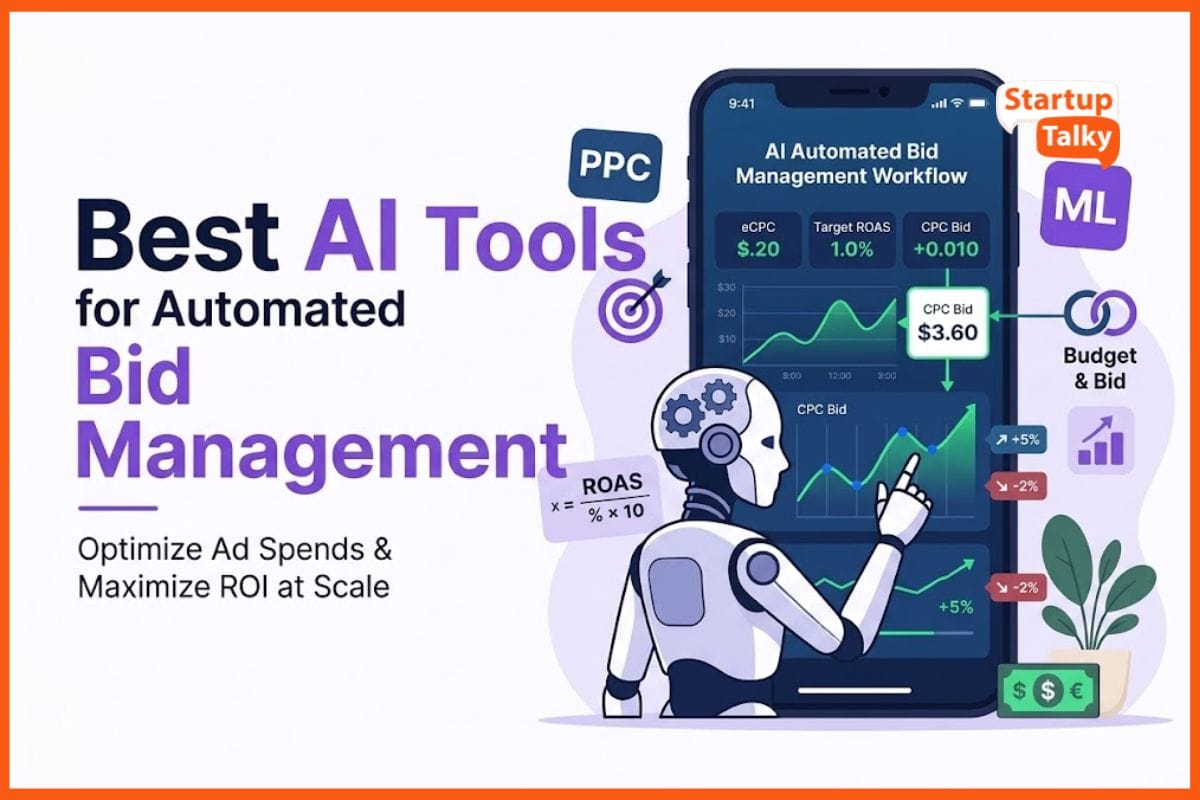
AI tools for automated bid management help teams make faster, smarter decisions in competitive auctions and ad campaigns. They study past results, market shifts, budgets, and performance signals to adjust bids in real time. This reduces manual work and limits costly guesswork.
Teams can set clear goals, such as more leads, lower costs, or higher returns, while the system optimizes toward them. Built-in alerts and reports also flag risks and new chances.
The result is better budget control, quicker action, and more time for strategy. These tools help businesses compete with confidence as markets change.
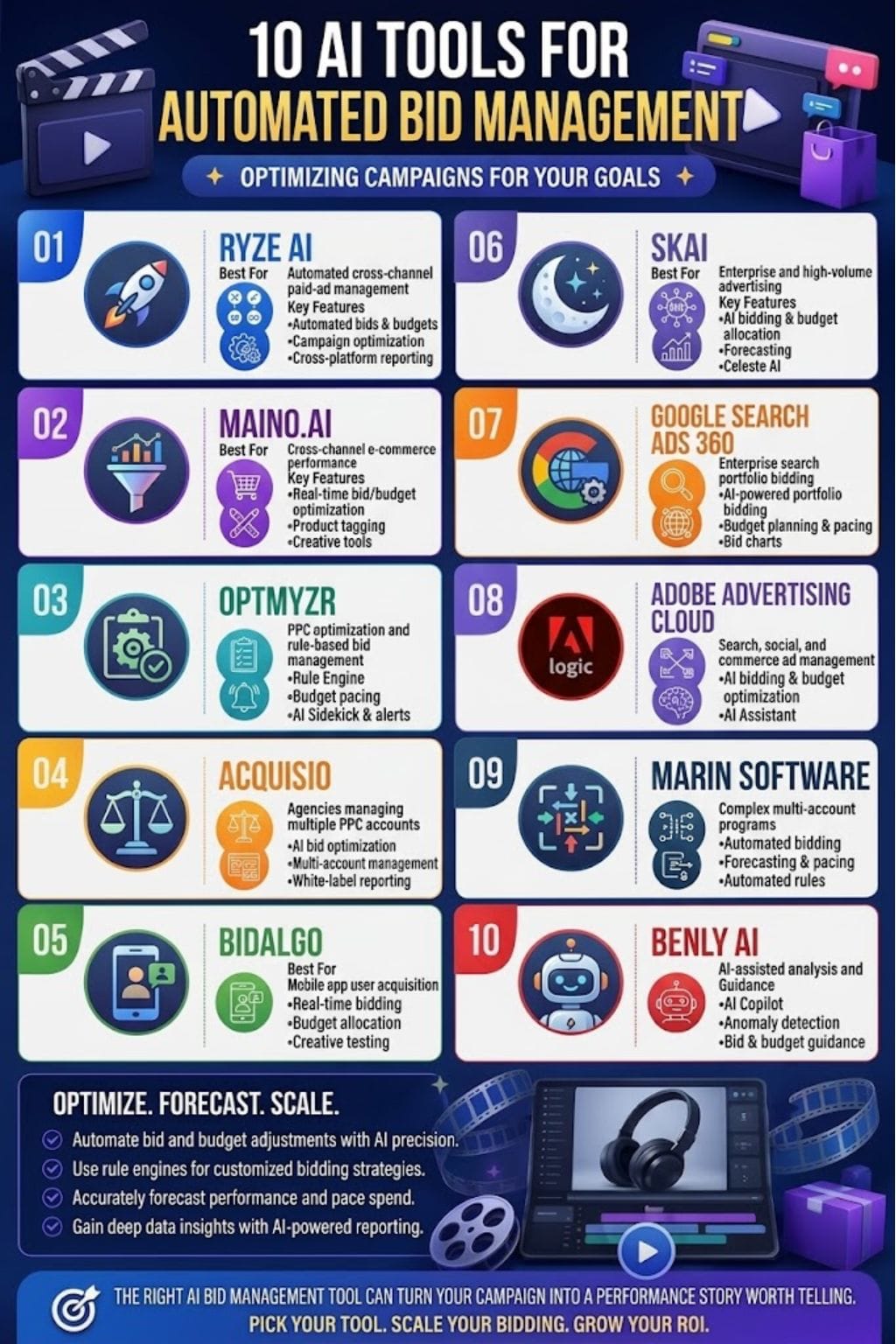
AI Tools for Automated Bid Management: Comparison
| AI Bid Management Tool | Best For | Key Features | Drawbacks |
|---|---|---|---|
| Ryze AI | Automated paid-ad management across major channels | Automated bids and budgets, campaign optimization, creative rotation, cross-platform reporting, approval controls | Full automation needs careful approval rules; results depend on tracking, data, offers, and creative quality |
| Maino.AI | Cross-channel performance marketing and e-commerce | Real-time bid and budget optimization, product tagging, creative tools, audience targeting, AI copilot | Automation can make errors costly; independent review coverage appears limited |
| Optmyzr | PPC optimization and rule-based bid management | Rule Engine, bid strategies, budget pacing, custom metrics, AI Sidekick, alerts, change logs, undo options | Complex rule setup can require PPC expertise; does not replace campaign strategy |
| Acquisio | Agencies managing multiple PPC accounts | AI bid optimization, budget management, multi-account management, dashboards, scheduled reports, white-label reporting | Needs reliable tracking and clear goals; human oversight is still required |
| Bidalgo | Mobile app user acquisition | Real-time bidding, budget allocation, creative testing, automated uploads, analytics, cross-channel reporting | Mainly suited to app marketers; requires reliable conversion, revenue, and attribution data |
| Skai | Enterprise and high-volume advertising | AI bidding, budget allocation, forecasting, attribution, reporting, cross-channel campaign management, Celeste AI | Setup and governance can take time; focused on media management rather than end-to-end creative production |
| Google Search Ads 360 | Enterprise search advertising and portfolio bidding | AI-powered bidding, portfolio bidding, budget planning, pacing, forecasting, bid charts, central reporting | Needs accurate conversion data; provides less direct control over individual auction bids |
| Adobe Advertising Cloud | Large teams managing search, social, and commerce advertising | AI bidding, budget optimization, cross-channel planning, reporting, measurement, AI Assistant | Requires clean data and campaign volume; can be complex for small teams |
| Marin Software | Complex multi-account advertising programs | Automated bidding, budget management, forecasting, pacing, offline conversion data, automated rules | Advanced plans may require custom pricing and annual contracts; setup can take time |
| Benly AI | AI-assisted analysis and management across major ad platforms | AI Copilot, cross-platform dashboard, anomaly detection, Ad Spy, creative analysis, bid and budget guidance | Guidance may not provide full automation; not a dedicated feed tool |
Ryze AI
Ryze AI is an autonomous paid-ad platform that helps teams manage and optimize advertising across major channels. It continuously adjusts bids and budgets, moves spending toward better-performing campaigns, and identifies wasted spend, weak search terms, and gaps in conversions. It can also rotate ads when creative performance starts to drop.
Ryze supports Google Ads, Meta, TikTok, and LinkedIn, along with more than 50 integrations. It provides cross-platform reporting with key metrics such as CPA and ROAS.
Teams can also set approval controls and receive updates through Slack or Microsoft Teams, giving them automation while keeping control over important decisions.
Pros
- Ryze can make bid and budget changes, rather than only flagging issues for a marketer to fix
- It links bidding, budget pacing, audience work, and creative rotation in one workflow
- Human approval settings can limit unwanted automated changes
Cons
- Full automation can reduce hands-on control if approval rules are not set with care
- Results still depend on clean conversion tracking, enough data, sound offers, and usable creativity
Pricing
| Plan | Pricing |
|---|---|
| Paid Ads AutoPilot | $89/month |
| SEO AutoPilot | $129/month |
| Traffic Printer | $599/month |
| Ecom Autopilot | $1,499/month |
Maino.AI
Maino.AI is an AI-powered performance marketing platform that helps businesses manage and optimize digital ad campaigns. Its Manthan system automatically adjusts bids and budgets in real time across Google Ads, Meta Ads, and Amazon Advertising.
It uses key data such as ROAS, CPA, attribution, audiences, creatives, and product performance to move spending toward better results. Its Dynamic Product Tagging feature groups eCommerce products based on ROAS and helps prioritize high-performing SKUs.
Maino.AI also brings creative tools, audience targeting, analytics, and an AI copilot into one platform. It integrates with Shopify, Google Analytics, AppsFlyer, Adjust, Firebase.
Pros
- It can move budgets across ad platforms, rather than optimize each platform in isolation
- Product-level automation may help large e-commerce catalogs handle fast changes in demand
- Creative and audience signals can inform bid decisions, which may reduce siloed campaign work
Cons
- Cross-channel automation can make errors costly if targets, tracking, or guardrails are wrong
- Public third-party review depth appears limited, so independent proof may be thin for some use cases
Maino.AI Pricing
| Plan | Pricing |
|---|---|
| Request for Pricing (RFP) | Contact Maino.AI |
Optmyzr
Optmyzr is an AI-assisted PPC platform that helps advertisers manage and automate their ad campaigns. Its Rule Engine uses simple IF/THEN rules to change bids, pause poor-performing keywords, and control budgets based on set schedules.
The platform works with Google Ads, Microsoft Ads, and Amazon Ads. Users can create custom metrics, set bid strategies, manage budget pacing, and receive alerts when performance changes.
Its AI Sidekick provides account insights in simple language, making campaign data easier to understand. Optmyzr also keeps detailed change logs and offers undo options, giving teams more control.
Pros
- Includes logs and undo options, which help reduce the risk of bad bulk changes
- Works across several ad platforms and accounts from one workflow
- AI Sidekick can explain account data in natural language
Cons
- Rule setup can take time and PPC skill, especially for complex accounts
- It is an optimization layer, not a full replacement for sound campaign strategy
Pricing
| Plan | Pricing |
|---|---|
| Essentials | $299/month |
| Premium | $389/month |
| Enterprise | Contact Sales |
 Vivek Dev Jacob
Acquisio
Acquisio is an AI-powered platform that helps agencies and advertisers manage PPC campaigns. It uses machine learning tools such as Turing and Yield to adjust bids and control budgets based on campaign data.
The platform can optimize spending for goals like conversions, CPA, and ROI. It also lets teams manage multiple accounts and advertising channels from one place. Other features include performance tracking, custom dashboards, scheduled reports, and white-label reporting for agencies.
Acquisio can save time by reducing manual bid management and improving budget control. However, good results still depend on accurate tracking, clear goals, and regular human oversight.
Pros
- Designed for agencies, with tools for many client accounts, branded reports, and reseller workflows
- Combines bid control with budget management instead of treating them as separate tasks
- Supports search and social ad operations in one management layer
Cons
- It needs reliable conversion tracking and clear targets
- Teams still need to set strategy, review results, and handle creative, audiences, and landing pages
Acquisio Pricing
| Plan | Pricing |
|---|---|
| Request for Pricing (RFP) | Contact Acquisio |
Bidalgo
Bidalgo is an AI-powered user acquisition platform built for mobile app marketers. It helps growth teams manage and improve paid advertising across major ad channels.
The platform uses performance data to adjust bids, budgets, campaigns, and creatives in real time. Marketers can set goals such as CPI or ROAS and let Bidalgo optimize spending toward better-performing campaigns.
It also supports automated creative uploads and testing, dynamic budget allocation, campaign automation, performance analytics, cross-channel reporting, and API integrations. Bidalgo is mainly suited for companies that run large, performance-focused app marketing programs and need to manage multiple campaigns.
Pros
- Optimizes toward practical goals such as CPI and seven-day ROAS
- Refreshes, tests, and allocates creative based on delivery and results
- Supports real-time bidding and budget pacing at scale
Cons
- Built mainly for mobile-app user acquisition, so it may not fit non-app advertisers
- Strong automation needs reliable conversion, revenue, and attribution data
Bidalgo Pricing
| Plan | Pricing |
|---|---|
| Request for Pricing (RFP) | Contact Bidalgo |
Skai
Skai, formerly known as Kenshoo, is an enterprise advertising platform that helps large businesses manage campaigns across search, social, apps, and retail media. It uses AI to automate tasks such as bidding, budget allocation, and campaign decisions, helping teams improve performance while saving time.
Skai supports major platforms, including Amazon, Walmart, Google, and Meta, giving advertisers one place to manage multiple channels. It also offers tools for forecasting, reporting, attribution, and campaign control.
The platform is best suited for large advertisers and teams running high-volume, complex campaigns. Smaller businesses with simple ad accounts.
Pros
- Cross-channel planning and measurement reduce work across separate ad platforms
- Enterprise controls, reporting, and client support fit complex teams
- Celeste AI and other GenAI capabilities are included in published tiers
Cons
- Setup, data links, and governance can take time for large accounts
- It focuses on media management, not end-to-end creative production
Skai Pricing
| Plan | Pricing |
|---|---|
| Standard | $114,000/year |
| Advanced | $276/year |
| Enterprise | $504/year |
| Enterprise Premier | $756/year |
Vivek Dev Jacob
Google Search Ads 360
Google Search Ads 360 is an enterprise search advertising platform powered by Google AI. It helps businesses manage and optimize bids based on goals such as clicks, conversions, conversion value, CPA, or ROAS.
It supports portfolio bidding, allowing campaigns with the same goal to be managed together, even across supported ad platforms. It can also adjust bids during auctions using signals such as device, location, and audience.
Other features include budget planning, pacing, forecasting, bid charts, bulk target updates, and central reporting. With Merchant Center integration, businesses can also automate campaigns based on product inventory.
Pros
- Bid decisions align to stated business outcomes, not only clicks or average position
- Portfolio rules can coordinate many campaigns and respond faster than manual reviews
- Budget bid strategies can pace spend across a month or quarter
Cons
- Needs accurate conversion tracking and enough reliable data
- Less direct control over each auction-level bid
Google Search Ads 360 Pricing
| Plan | Pricing |
|---|---|
| Google 360 Plans | Included with Google 360 Plans |
Adobe Advertising Cloud
Adobe Advertising uses AI to manage bids, budgets, and campaign targets across search, social, and commerce channels. It studies data such as clicks, costs, conversions, and auction activity to decide where ad spend can work best.
The platform can shift budgets and adjust bids based on goals like return on ad spend, revenue, or cost per acquisition. It also tracks campaigns and responds to market changes in real time.
Teams can use its AI Assistant to find insights, improve campaign setup, and get recommendations. With cross-channel planning, reporting, measurement, and optimization.
Pros
- Reduces manual bid checks and routine budget changes
- Helps large teams run search, social, and commerce activity in one system
- Uses conversion and cost history to guide bid choices
Cons
- Results depend on clean conversion data and enough campaign volume
- The platform may feel complex for small teams or simple ad accounts
Adobe Advertising Cloud Pricing
| Plan | Pricing |
|---|---|
| Request for Pricing (RFP) | Contact Adobe |
Marin Software
Marin Software is an AI-powered platform that helps businesses manage and optimize digital advertising campaigns. It automates bid management across paid search, social media, retail media, and ecommerce channels.
The platform uses conversion data, including offline sales, calls, and customer value, to make smarter bid decisions. Teams can manage campaigns across different channels from one place, forecast returns at various budget levels, and control spending with pacing tools.
Marin also supports automated rules and workflows for bids, budgets, and campaign status. It is designed for advertisers who want better control, clear reporting, and a simple way to coordinate campaigns.
Pros
- Flexible “source of truth” data inputs can connect bidding to real business value
- Forecasting exposes likely results before budget changes, which can aid planning
- Strong fit for complex, multi-account advertisers that need a central control layer
Cons
- Full AI bidding and advanced plans may require a custom quote and annual contract
- Setup can take time because results depend on clean conversion and revenue data
Marin Software Pricing
| Plan | Pricing |
|---|---|
| Request for Pricing (RFP) | Contact Marin Software |
Vivek Dev Jacob
Benly AI
Benly AI is an AI-powered media-buying copilot that helps marketers manage paid ads across Meta, Google, and TikTok. It brings campaign data into one dashboard, making it easier to track results and spot sudden changes.
Users can ask questions in plain language, compare channel performance, review reports, and get suggestions for bids and budgets. Its anomaly detection helps flag unusual performance, while the Ad Spy database provides access to more than 50 million ads for research.
Benly also offers creative analysis and tools for producing ads. Overall, it focuses on faster analysis, better reporting, and practical guidance.
Pros
- It can connect performance signals across major ad platforms
- The AI Copilot can make data review easier for teams
- It combines analysis, reports, creative review, and budget guidance in one workspace
Cons
- Guidance may not equal full automation
- Not a dedicated feed tool
Benly AI Pricing
| Plan | Pricing |
|---|---|
| Starter | $99/month |
| Boost | $199/month |
| Scale | $499/month |
How to Choose an AI Bid Management Tool
Choosing an AI bid management tool depends on the platforms you use, campaign size, advertising goals, and the amount of automation your team needs.
Consider these factors before selecting a platform:
1. Advertising Channels
Check whether the tool supports the platforms where you run campaigns, such as Google Ads, Meta, TikTok, LinkedIn, Amazon, or Microsoft Ads.
2. Automation Level
Some tools can automatically change bids and budgets, while others mainly provide recommendations, alerts, or rules. Choose an automation level that matches your team's workflow.
3. Campaign Goals
Look for support for the metrics that matter to your business, such as CPA, ROAS, ROI, conversions, CPI, revenue, or lead volume.
4. Reporting and Alerts
Cross-channel dashboards, anomaly detection, alerts, and scheduled reports can make it easier to identify performance changes and act quickly.
5. Data and Tracking
AI bidding depends heavily on reliable data. Make sure conversion tracking, attribution, revenue data, and other performance signals are accurate before relying heavily on automated decisions.
6. Human Controls
Approval settings, rules, change logs, and undo options can help teams maintain control while still benefiting from automation.
Benefits of AI-Powered Bid Management
AI-powered bid management can help advertising teams:
- Reduce repetitive manual bid changes.
- Adjust bids and budgets faster.
- Analyze large amounts of campaign data.
- Move spending toward better-performing campaigns.
- Identify wasted ad spend.
- Improve budget pacing and control.
- Monitor multiple advertising channels.
- Detect unusual performance changes.
- Spend more time on strategy and creative work.
However, automation does not remove the need for human oversight. Campaign strategy, conversion tracking, creative quality, offers, audiences, and landing pages can all affect results.
Final Thoughts
AI tools for automated bid management help teams move faster, spend smarter, and reduce manual work. They sort large data sets, adjust bids and budgets, and flag important opportunities and risks.
This gives teams more time to plan, price, and build stronger campaigns. Clear insights can also help leaders make decisions with less manual analysis.
When used with skilled human review, automation can improve speed, accuracy, and control. It does not replace good judgment; it strengthens the process.
Businesses that adopt this approach can respond more quickly as markets change while maintaining better control over advertising budgets and campaign performance.
FAQs
What are AI tools for automated bid management?
AI tools for automated bid management use artificial intelligence to adjust bids, budgets, and campaign settings based on performance data, business goals, and market signals.
What are the best AI tools for automated bid management?
Popular AI bid management tools include Ryze AI, Maino.AI, Optmyzr, Acquisio, Bidalgo, Skai, Google Search Ads 360, Adobe Advertising, Marin Software, and Benly AI.
How do AI bid management tools work?
These tools analyze campaign data, conversion signals, budgets, and performance trends to automatically adjust bids and spending toward goals such as higher conversions, lower CPA, or better ROAS.
What are the benefits of automated bid management?
Automated bid management can reduce manual work, improve budget control, respond quickly to market changes, and help teams optimize advertising campaigns using real-time performance data.
Do AI bid management tools replace human marketers?
No. AI tools can automate repetitive bidding and optimization tasks, but human oversight is still important for campaign strategy, creative decisions, conversion tracking, budgets, and overall business goals.