

Dheeraj Bansal on Building a Beauty Brand Beyond the Metros
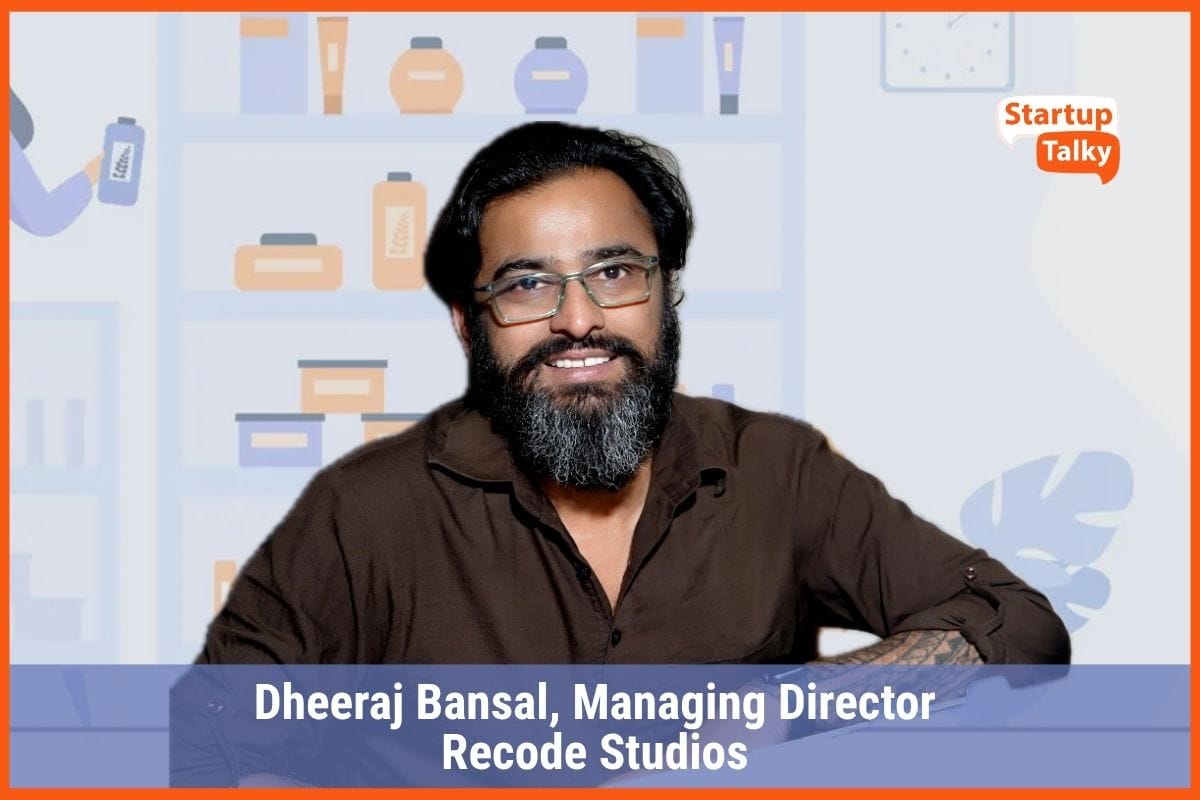
Dheeraj Bansal, Managing Director of Recode Studios, shares insights into the company’s BSE SME IPO, business growth, investor expectations, profitability, and plans for a potential mainboard listing.
India's beauty and personal care market was valued at approximately USD 31.2 billion in 2025 and is projected to reach USD 48.7 billion by 2034, creating opportunities for emerging beauty brands.
Dheeraj Bansal, Managing Director of Recode Studios, has built the beauty brand from Ludhiana, focusing on retail distribution and direct-to-consumer growth. In May 2026, Recode listed on the BSE SME platform, with its IPO subscribed more than 220 times. In this interview, Bansal discusses the decision to go public, IPO preparation, investor expectations and the company's plans for sustainable growth.
Why Recode Studios Chose the BSE SME IPO Route in 2026
StartupTalky: Recode listed on the BSE SME platform in May 2026 and was subscribed more than 220 times. Why did you choose the SME route over waiting to scale for a mainboard listing, and would you make the same decision again?
Dheeraj Bansal: This SME approach was indeed a sensible approach given the fact that the company had developed to a point whereby entry into the public market would facilitate the next phase of development without the need to wait for the company to meet all the eligibility criteria of a mainboard listing. From the structure of the IPO, it is clear that the purpose of the IPO was not only to generate money for working capital, a new warehouse in Ludhiana, and marketing but also to provide some liquidity in the form of an offer for sale. At this point, it made sense for the company to take such an approach.
Building Recode Studios from Ludhiana with a Capital-Efficient Business Model
StartupTalky: Recode was built from Ludhiana without the typical metro VC playbook. How did being a founder-led, largely capital-efficient business shape your IPO preparation, and did it make investor conversations easier or harder?
Dheeraj Bansal: The business was built out of Ludhiana, which meant that growth had to be powered by customer knowledge, logistics, and the economics of operations, and not by having access to large amounts of capital from outside. This is because the company grew using retail logistics at first, which allowed the creation of market knowledge before growing the D2C platform. Such a way of thinking about the business became important during the preparations for the IPO, since there was a need to demonstrate to the investors the company’s financials, operations, and future needs. Discussions with the investors eventually became focused on the basic things: profitability, logistics, working capital, and future growth plans.
IPO Preparation: Governance, Financial Reporting and Compliance Challenges
StartupTalky: What did the IPO process demand from Recode that you did not anticipate, whether in governance, financial reporting, board composition or internal controls, and how long did it take to put those in place?
Dheeraj Bansal: The most significant change was the level of structure and accountability that needed to be introduced throughout the organisation. Preparation for the public listing meant that the financial information had to be properly restated and documented, while governance, board procedures, disclosures, and compliance systems needed to operate in a far more consistent manner. The company’s public disclosures now contain formal policies relating to board conduct, independent-director familiarisation, related-party dealings, whistle-blower procedures, material events, and document preservation. The process therefore went beyond merely preparing the financial statements for the offering. The organisation needed to develop systems that would allow it to meet its ongoing public-company responsibilities. The preparation for the listing made governance and internal procedures far more structured than they had been as a privately held business.
Managing Investor Expectations After Recode Studios’ Strong IPO Debut
StartupTalky: The listing saw strong day-one gains. How do you think about managing investor expectations after a strong debut, and how has quarterly scrutiny changed the way you make decisions on pricing, expansion or marketing spend?
Dheeraj Bansal: Listing is certainly encouraging, but then again it adds more pressure to stay focused on the core business and not get distracted by the stock price. Shares listed at ₹213.10 against an issue price of ₹158 and then went up to ₹223.75 on the very first day of listing. It makes it all the more necessary that one must distinguish between the market performance and operational performance. Execution, staying disciplined, good margin, working capital management, distribution and marketing expenditure for which there is a definite business rationale should be of prime focus post-listing. And since there is quarterly reporting, it will add another dimension of transparency since now the performance can be seen by a larger audience of investors.
Balancing Fresh Issue Proceeds and Shareholder Liquidity in Recode’s IPO
StartupTalky: Your offer included an offer-for-sale component alongside the fresh issue. How did you decide how much of the IPO would provide liquidity to existing shareholders versus raising growth capital for the company?
Dheeraj Bansal: Listing is certainly encouraging, but then again it adds more pressure to stay focused on the core business and not get distracted by the stock price. Shares listed at ₹213.10 against an issue price of ₹158 and then went up to ₹223.75 on the very first day of listing.
It makes it all the more necessary that one must distinguish between the market performance and operational performance. Execution, staying disciplined, good margins, working capital management, and distribution and marketing expenditure, for which there is a definite business rationale, should be of prime focus post-listing. And since there is quarterly reporting, it will add another dimension of transparency, since now the performance can be seen by a larger audience of investors.
Why Profitability and Distribution Matter in India’s Beauty and Personal Care Market
StartupTalky: Beauty and personal care is a crowded category with many VC-funded D2C brands. What does public-market investor interest in Recode tell you about how investors now value profitability and distribution compared with growth at any cost?
Dheeraj Bansal: Interest shown by investors in the business indicates the changing dynamics of how consumer businesses can now be assessed. When it comes to beauty and personal care, while growth continues to play a role, scale alone does not make for a long-term viable business model. Distribution, recurrent demand, operational discipline, and the ability to convert revenue into profits become increasingly important once a consumer business goes public.
The business’s progression from retail distribution to a broader D2C and retail presence demonstrates the value of building multiple routes to consumers rather than depending on one channel. Public-market participation also places greater emphasis on financial visibility and consistency. For consumer founders, the message is clear: growth needs to be supported by sound economics, efficient distribution, and a credible path to sustainable profitability.
Managing Compliance and Investor Relations as a Listed Company
StartupTalky: What does life as a listed company look like day to day? Which disclosure or compliance obligations take the most leadership time, and what would you advise other consumer founders to set up before they list?
Dheeraj Bansal: As a listed company, there will definitely be a much more structured way of handling information, governance, and decision-making. There will be disclosure, board and committee processes, compliance obligations, financial reporting, and shareholder communication as an integral part of the business operations.
Investor relations practices within the company include policies on material event disclosure, archival policy, board behavior, independent directors, related party transactions, among others. To other founders of consumer companies looking to list their business, the key takeaway is that such systems need to be put in place before listing rather than afterwards. It is imperative to have robust financial reporting, internal responsibility, compliance accountability, and a board system that is capable of taking on public company requirements.
Recode Studios’ Plans for Migration from the SME Platform to the Mainboard
StartupTalky: Is a migration from the SME platform to the mainboard part of Recode's roadmap, and what milestones would you need to hit before you considered it?
Dheeraj Bansal: Migration to the mainboard can be considered as the business reaches the required scale, operating maturity and regulatory eligibility, but it should not be treated simply as the next automatic step after an SME listing. The priority is to continue strengthening revenue, profitability, distribution, governance and reporting systems while building a larger and more resilient business.
Mainboard migration also has specific eligibility requirements, including a minimum SME-listing tenure of three years under the rules applicable since January 2024. The right time to evaluate the move would therefore depend on both regulatory eligibility and whether the company has reached a scale that makes the transition strategically meaningful. The focus should remain on building the business first and migrating when the fundamentals support it.
 Apoorva Bajj