
Mihir Joshi on VC Exits, IPOs and India’s Startup Ecosystem
GVFL Managing Director Mihir Joshi discusses India’s evolving venture capital ecosystem, exit strategies, SME IPOs, secondary sales, deeptech investments, and the future of startup liquidity.
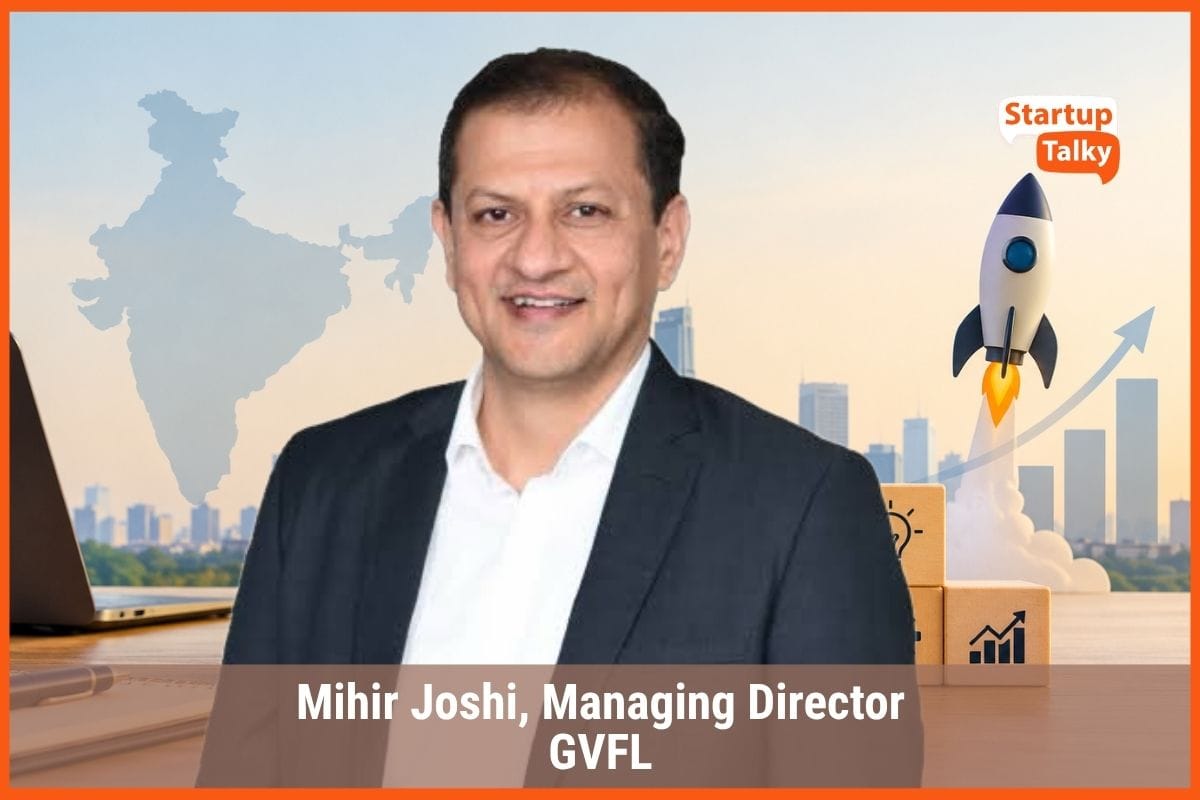
India’s venture capital (VC) industry is evolving as startups scale, institutional investment expands, and investors gain more options to exit their investments. According to industry estimates, India’s private equity and venture capital industry has grown significantly over the past decade, supported by rising startup activity across fintech, deeptech, space technology, biotechnology, and defence. The future of the sector will depend not only on fresh capital but also on stronger exit routes, including IPOs, strategic acquisitions, and secondary transactions.
In this interview, Mihir Joshi, Managing Director of GVFL, shares his perspective on how India’s venture capital ecosystem is changing. He discusses exit strategies, SME IPOs, secondary sales, deeptech investments, corporate governance, and the challenges venture capital firms face when returning capital to their limited partners (LPs). He also explains why companies must prioritise long-term growth and IPO readiness over investor timelines.
How GVFL’s Exit Strategies Have Evolved Across IPOs, Strategic Sales and Secondary Sales
StartupTalky: GVFL has managed multiple full fund life cycles since 1990, from fundraising to final exit. How has the exit mix across your portfolio shifted between IPOs, strategic sales and secondary sales over the last decade, and which route has returned the most capital to your LPs?
Mihir Joshi: GVFL has been investing in early-stage companies for more than three decades, and one of the biggest changes we have seen is that there are many more exit options today. There is also far more capital available for startups that demonstrate scale.
We have seen exits through IPOs, strategic sales and secondary sales. Strategic sales have delivered multifold returns in some cases, although such opportunities are limited. Secondary sales have become a practical route as the pool of investors has expanded. For an early-stage investor, having different exit options is a sign of a healthier and more mature ecosystem.
SME IPOs vs Mainboard Listings: Choosing the Right Exit Route
StartupTalky: The SME platforms on BSE and NSE have become a real listing route for smaller companies. From a VC's perspective, is an SME IPO a genuine exit or just a liquidity event that keeps the investor locked in? When would you advise a portfolio company to take that route rather than wait for a mainboard listing?
Mihir Joshi: We believe the decision to go public should begin with the company’s readiness, not the investor’s need for an exit. A company should have the maturity and scale required for that transition.
In recent years, we have invested in companies that might otherwise have raised capital through an SME IPO. Institutional capital gave them an opportunity to build greater scale and market presence while strengthening corporate governance. An IPO is an important milestone, but it should support the company’s next phase of growth rather than become an end in itself.
How Venture Capital Funds Manage Exits When Portfolio Companies Need More Time
StartupTalky: GVFL typically works on a five-to-seven-year holding horizon. When a fund nears the end of its life and a strong company is not yet IPO-ready, what are the realistic options, and how do you decide between a secondary sale to a growth fund, a continuation vehicle or extending the fund?
Mihir Joshi: Every fund has a fixed tenure, but companies grow on their own timelines. If a company is still building towards IPO readiness, selling the stake to another investor or fund is one practical option.
India’s private secondary market has become much more active in recent years. Funds, family offices, HNIs and corporates are interested in companies that may eventually pursue an IPO or strategic sale. This gives early investors an exit option while allowing a promising company the time it needs to continue growing.
Deeptech Investments in India: Exit Strategies and Public Market Readiness
StartupTalky: You have backed companies across deeptech, space, biotech and defence, where the path to revenue is long. How do you think about exits for deeptech companies in India, and is the public market ready to value businesses that may take a decade to reach profitability?
Mihir Joshi: Early-stage investment in deeptech is high-risk and high-reward. We are seeing opportunities emerge in India that have the potential to make an impact globally.
With deeptech, current scale tells only part of the story. What matters more is the potential of the technology, the problem it solves and how large that opportunity can become. As more deeptech companies emerge from India, investors will also have to look beyond present scale and understand what that technology could become over time.
IPO Readiness: Governance and Reporting Gaps Startups Must Address Early
StartupTalky: When a portfolio company starts preparing for an IPO, what are the governance and reporting gaps you most often find at board level, and how early should founders start closing them?
Mihir Joshi: The gaps differ from company to company, but our approach at GVFL is clear: governance should be built early.
For us, governance goes beyond a tick mark or statutory compliance. It has to become part of the culture of the organisation and the way decisions are made. When these practices are embedded early, a company is better prepared as it grows and eventually accesses the public markets. IPO readiness starts much before the IPO itself.
Pricing Secondary Sales Without Hurting Future Valuations
StartupTalky: Secondary transactions in India are often priced at a steep discount to the last primary round. How do you negotiate price in a secondary sale without hurting the company's valuation story for its next primary round or its IPO?
Mihir Joshi: Every secondary transaction is different, so there cannot be one formula for pricing. A lot depends on what you are holding, how the company is performing, its future outlook, the narrative around the business and the number of willing buyers.
All these factors influence what the market is willing to pay at that point. Valuation matters, but it must be looked at in the context of the business and the market rather than through any single formula.
Can Startups Outside Major Cities Attract Institutional Investors and Access Public Markets?
StartupTalky: GVFL began as a state-backed vehicle in Gujarat and now invests nationally. Are companies from outside Mumbai, Bengaluru and Delhi NCR at a disadvantage when it comes to public-market readiness, access to bankers or investor attention? If so, what closes that gap?
Mihir Joshi: A good company can attract investor interest regardless of where it is based. Once a company raises institutional capital and demonstrates scale, investors take notice. Ultimately, they are looking at the strength of the business, its performance and its growth potential.
As capital becomes more widely available across India, geography will matter even less. If the business is strong and can demonstrate scale, its location becomes far less important.
The Future of Liquidity Options in India’s Venture Capital Ecosystem
StartupTalky: After more than 25 years in Indian venture capital, which liquidity instrument or structure do you believe the ecosystem still lacks, and what would it take from regulators or market participants to create it?
Mihir Joshi: If you had asked me this question seven years ago, I would probably have had a much longer answer. India has evolved significantly since then, and that itself says something about how much the ecosystem has matured.
Investors today have more avenues for liquidity, and the secondary market has become much more active, with funds, family offices, HNIs and corporates participating. The focus now should be on making these markets deeper and more efficient, while giving investors more practical options for liquidity and exits.
 Apoorva Bajj