How Rathnakar Samavedam Is Bridging India’s Early-Growth Funding Gap Through Smarter Venture Capital
Rathnakar Samavedam shares how Hyderabad Angels Fund is backing resilient startups, addressing India’s early-growth funding gap, and reshaping regional venture capital.
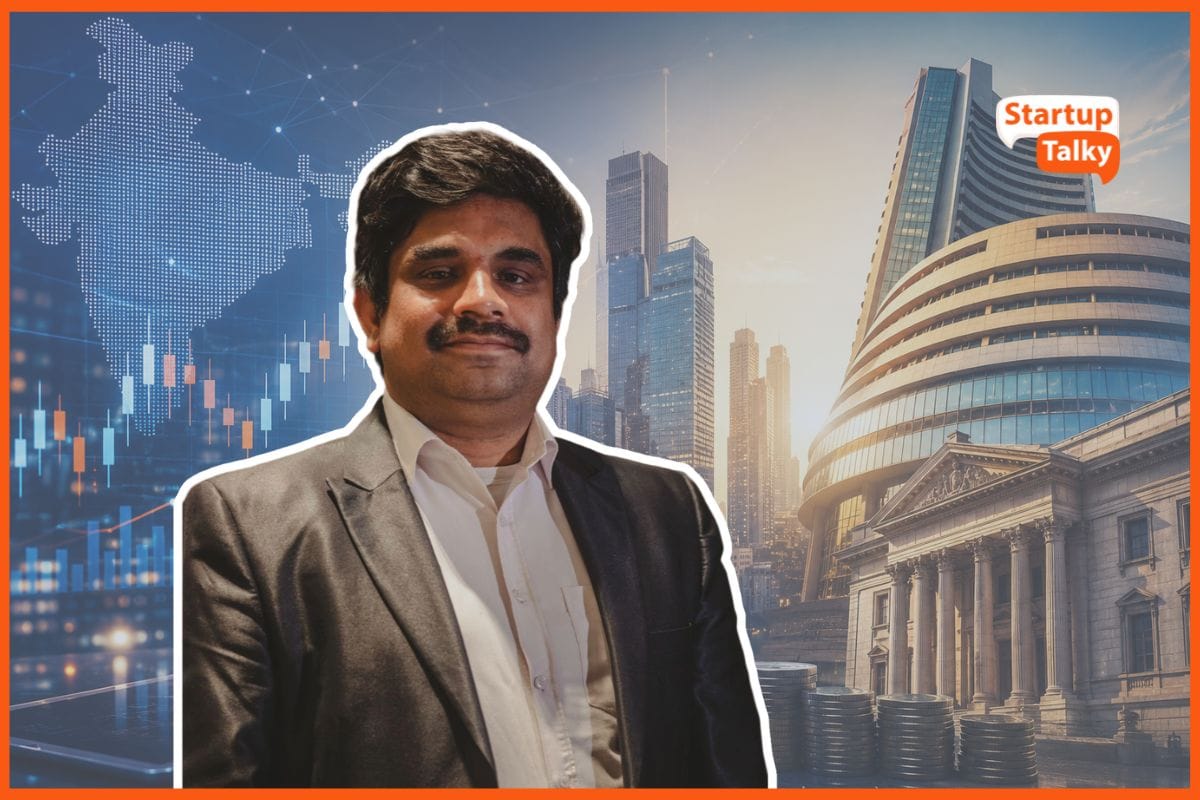
India’s alternative investment market is expected to grow at a CAGR of 13–15%, even as funding challenges persist for startups in the INR 1–50 crore revenue stage.
In this interview, Rathnakar Samavedam, Investment Director and Managing Partner at Hyderabad Angels Fund, shares his views on India’s early-growth funding gap, AI-led investing, Hyderabad’s startup rise, and what founders need to build resilient, scalable businesses.
StartupTalky: You noted that 2025 was particularly challenging for startups generating INR 1–50 Cr in revenue, a critical but underserved segment. What structural issues within Indian venture capital are causing this gap, and what realistic solutions exist?
Rathnakar Samavedam: The "Early-Growth" chasm of 2025-2026 is a result of a fundamental structural mismatch in fund mandates. On one side, Seed and Pre-Seed funds have become highly efficient at backing the "0-to-1" journey. On the other, large growth funds have moved upmarket, primarily hunting for startups with INR 100 Cr+ ARR to satisfy their own large ticket-size requirements. This leaves the "1-to-10" journey, startups in the INR 1–50 Cr revenue bracket, in a capital "no-man's land."
Structural Issues
- Narrative Fatigue: The market has shifted from backing "grand narratives" to demanding "execution depth." Many startups in this bracket hit a ceiling because their unit economics don't scale as linearly as their pitch decks promised.
- Risk Appetite: Institutional investors often view this middle segment as having "Seed-stage risk" but "Growth-stage valuations," leading to a deployment stalemate.
Realistic Solutions
India requires a surge in Category I AIFs and "Patient Series A" investors. The solution lies in smaller, agile institutional funds that specialize in operational scaling rather than just capital infusion. We need a "bridge-to-scale" framework where capital is deployed based on sustainable unit economics rather than blitzscaling potential.
StartupTalky: HAF.vc is transitioning from a 14-year angel network into a SEBI-registered Category I AIF. What are the practical governance, deal-sourcing, and LP dynamics challenges in that transition and what has surprised you most about operating as an institutional fund?
Rathnakar Samavedam: Transitioning to a SEBI-registered AIF is not merely a legal change; it is a total transformation of the investment DNA.
Challenges
- Governance: Moving from a "deal-by-deal" angel participation model to a fiduciary institutional structure requires a massive upgrade in compliance, standardized reporting, and risk management.
- LP Dynamics: We’ve moved from managing the individual interests of angel investors to satisfying the rigorous due diligence of institutional Limited Partners (LPs) and family offices. These LPs demand predictable deployment cycles and pari-passu rights.
- Regional Imbalance: A recurring challenge is the geographic concentration of capital. While Bengaluru and Delhi-based funds find it easier to attract institutional LP interest, regional funds in cities like Hyderabad or Pune must work twice as hard to prove their sourcing depth, despite having access to high-quality, lower-burn talent.
The Surprise
The biggest surprise has been the "Velocity of Conviction." While an angel network thrives on collective consensus—which can be slow—an institutional fund requires a high-conviction core team. We found that institutionalization actually speeds up decision-making because the mandate is clearer and the accountability is centralized. But acceptance of LP’s to an individual who ran angel network for almost 7 years, has been difficult to convince unless this funds proves we have done a good job.
StartupTalky: HAF's investment thesis spans GenAI, gaming, spacetech, drones, healthtech, and sustainability. With a cheque size of INR 2–4 Cr per company, how do you prioritise between sectors and what does the portfolio construction logic look like when targeting 15–20 companies from a INR 100 Cr corpus?
Rathnakar Samavedam: Portfolio construction is less about "picking winners" and more about a mathematical exercise in risk-adjusted diversification.
The Construction Logic
- The 65/35 Rule: We allocate approximately 65% of the corpus to initial "conviction bets" and reserve 35% for follow-on rounds. In the current market, protecting your pro-rata rights in breakout winners is the only way to ensure a fund-level return.
- Exit Visibility: We only invest where we see a clear path to at least a 4X MOIC (Multiple on Invested Capital) within a reasonable timeframe.
- Cross-Pollination: We prioritize sectors that share technological overlaps. For instance, our interest in Drones often intersects with Sustainability (precision agriculture) or Spacetech (sensor fusion).
Sector Prioritization
We prioritize "Capital Efficiency" over "Sector Hype." A gaming startup with high organic retention will often take priority over a GenAI startup with high burn and low moat.
StartupTalky: You have observed that AI has become a non-negotiable lever for startup success. How do you evaluate a startup's genuine AI adoption versus performative AI integration? Where have you seen founders use AI to mask weak fundamentals rather than strengthen them?
Rathnakar Samavedam: In 2026, the term "AI" is ubiquitous, but the quality is highly polarized.
Evaluating Genuine Adoption
- The Stack Audit: We look for Agentic AI, systems that don't just "chat" but actually execute complex, multi-step workflows. If the AI is "LLM-native" and integrated into the core product architecture, it is genuine.
- Performance vs. Wrapper: We stay cautious of "GPT-wrappers", startups with a thin UI layer on public LLMs. These have a short shelf life (often 3–5 years) as the underlying models (OpenAI, Google, Anthropic) eventually build those features natively.
Masking Weak Fundamentals
Founders often use AI to mask high churn or poor Customer Acquisition Costs (CAC). They might show "AI-driven engagement," but if the underlying Net Promoter Score (NPS) is low, the AI is just a temporary dopamine hit for the user. Genuine AI should either significantly reduce the cost of service or create a feature that was previously impossible.
StartupTalky: Hyderabad has historically been strong in IT services but has lagged Bengaluru and Mumbai in early-stage startup density. From your vantage point, what is actually changing on the ground and what still needs to change?
Rathnakar Samavedam: Hyderabad is currently at an inflection point, remarkably similar to where Bengaluru was a decade ago due to its Deeptech expertise in Spacetech and Medtech largely driven by ISRO and Pharma companies. This is at cusp of growth.
What is Changing
- Product-First Talent: The presence of Global Capability Centers (GCCs) and the success of local giants like Skyroot (Aerospace) and HighRadius (SaaS) have shifted the talent pool. The workforce is no longer just "coding for hire"; they are building products for the world.
- Deeptech Dominance: Hyderabad is emerging as the national capital for Deeptech, Spacetech, and Lifesciences, leveraging its existing industrial base.
What Needs to Change
- The Virtuous Cycle: We need more "Second-time Founders." Bengaluru’s density is driven by successful founders who exit and immediately become angels, mentors, and VCs. Hyderabad’s "mafia" (in the PayPal sense) is only just beginning to form.
- Risk Appetite: The local capital pool is still somewhat traditional. We need to move more domestic capital from real estate into the innovation economy.
StartupTalky: HAF co-invests alongside VC firms at Pre-Series A to Series B. How do you manage the dynamics of being a smaller fund in a syndicate with larger co-investors particularly around follow-on rights, pro-rata access, and board representation?
Rathnakar Samavedam: The secret to successful syndication for a smaller fund is to provide Value-add beyond capital.
The Power Dynamic
- The "Local Lead" Role: Larger, national VCs bring "Brand Power," but they often lack local ground presence. HAF acts as the "Ground Support"—we help with local hiring, navigate regional regulatory hurdles, and open doors for business development within the local ecosystem.
- Negotiation: We are firm on pro-rata access and information rights. These are non-negotiable for us because they protect our LPs' interests.
- Synergy: Most Tier-1 VCs actually appreciate a specialized regional fund in the syndicate because we provide a closer level of monitoring and mentorship than a fund managing hundreds of companies from a central office can provide.
StartupTalky: HAF looks for 'better quality revenue with lesser capital' as a key investment signal. How do you assess revenue quality at the early stage? What data points or founder conversations give you genuine conviction on this metric?
Rathnakar Samavedam: Revenue is a vanity metric; Quality of Revenue is a sanity metric.
Assessment Criteria
- Net Revenue Retention (NRR): In B2B, a baseline of 100%+ NRR is essential. It proves that customers are not just staying but spending more over time.
- Customer Concentration: We look for a diversified base. If 70% of a startup's revenue comes from two clients, it’s a high-risk service business, not a scalable product.
- Expansion Revenue: We look for "Negative Churn." If a company can grow its revenue from existing cohorts without a heavy sales push, that is the ultimate signal of Product-Market Fit (PMF).
Founder Conversations
We ask founders: "If you stopped all marketing spend tomorrow, what happens to your revenue in six months?" The answer reveals the true health of the business.
StartupTalky: For a founder based in Hyderabad or a Tier 2 city wanting to pitch HAF, what does the ideal pitch look like and what are the fastest ways to get a decision rather than being stuck in a prolonged evaluation process?
Rathnakar Samavedam: Founders often mistake "length" for "depth."
The Ideal Pitch
A high-impact, 10-slide narrative that clearly answers:
- The Pain: What is the specific, expensive problem you are solving?
- The "Why Now": Why is 2026 the year this succeeds (Technological shift? Regulatory change?)?
- The Unit Economics: How do you make money sustainably?
- The Moat: Why won't a giant or a GPT-update kill you tomorrow?
The Fast Track to a Decision
The fastest way to a "Yes" (or a fast "No") is a Complete Data Room on Day 1. If a founder has their cap table, MIS, and audited cohorts ready the moment the first meeting ends, we can complete due diligence in 2–3 weeks. Delays almost always happen when investors have to "pull" basic data from the founder over several weeks.
Final Takeaway
The 2026 market belongs to the "Resilient Founder." The era of growth-at-all-costs is over. Whether you are in Hyderabad, Jaipur, or Kochi, the focus must be on building an "Indicorn", a profitable, resilient company that solves a real-world problem with global standards of execution.
 Apoorva Bajj