Before They Were Founders, They Were Engineers: What Would They Tell the Next Generation?
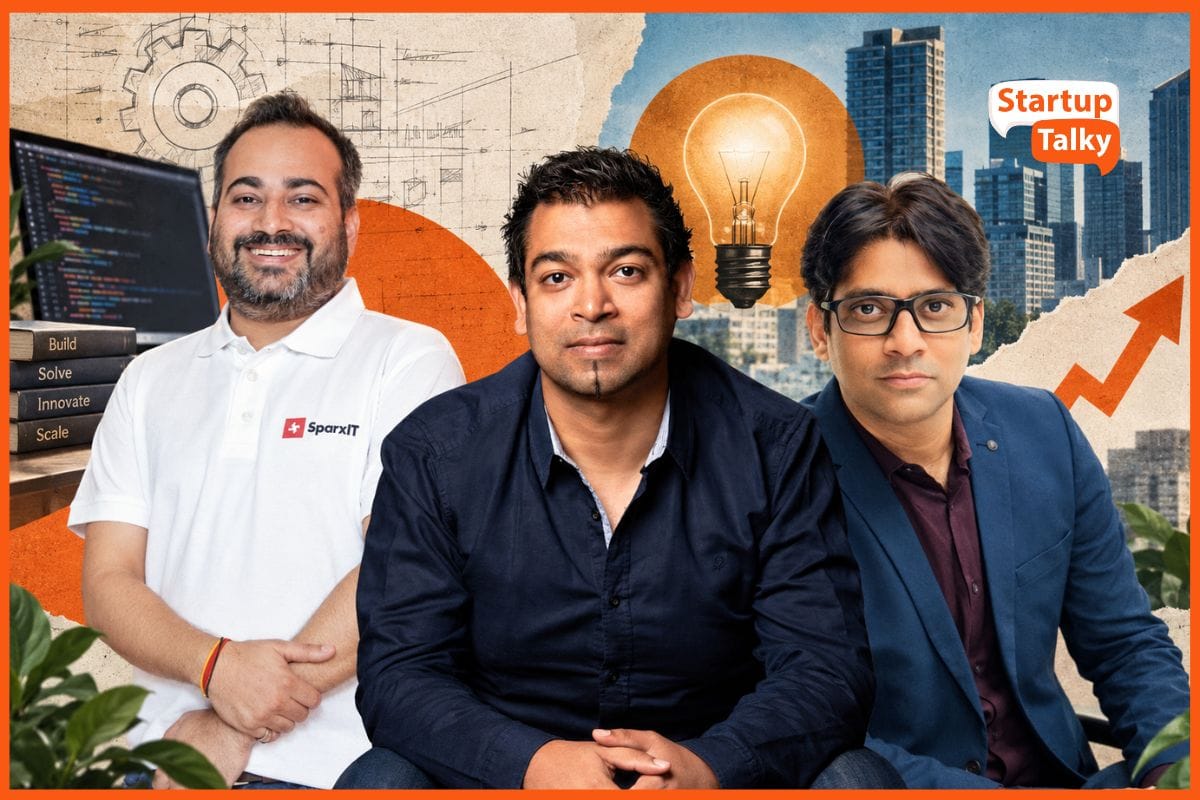
Every Engineers' Day, the familiar tributes return: engineering breakthroughs, college memories and tributes to Sir M. Visvesvaraya. But engineering itself is changing fast.
AI can now write code. New tools and frameworks arrive constantly. Companies have access to more data and computing power than ever before. Yet many of the problems engineers need to solve are still very human. People are overwhelmed by information. Businesses have powerful technology they struggle to use. And new systems do not always solve the problems they were built for.
For Engineers' Day, StartupTalky spoke to engineers who went on to build companies. We asked them two questions: What should the next generation of engineers focus on solving? And if they were engineering students again today, what would they do differently?
Their careers have taken them through software, enterprise technology, AI and digital products. Their answers come from different experiences, but point to a common idea: knowing how to build technology is important. Knowing what is worth building matters just as much.
From Engineering to Entrepreneurship
For Ronsley Vaz, Founder of Amplify AI, the journey began with software.
Vaz completed a Bachelor of Engineering in Computer Science at Karnatak University in 2001 and a Master of Software Engineering at Griffith University in 2006. He worked as a software engineer before moving into businesses in hospitality and podcasting. In 2022, he founded Amplify AI.
Its product, Friday, is an AI Chief of Staff that helps founders delegate recurring work, prepare decisions and produce content in their own voice.
His journey across engineering and entrepreneurship changed how he looks at technology. For Vaz, the real test is not how complex a system is, but how much unnecessary work it removes for people.
That is why he believes the next generation should focus on cognitive overload: the constant remembering, switching and repeating that takes up people's attention.
"We need systems that bring the right information to the right task, protect private data and keep people in control of consequential decisions," Vaz says.
As the technology industry focuses on making AI more capable, his point brings the focus back to the user. The question is not only what AI can do, but whether it can make people's work simpler.
The AI Problem May Not Be More AI
Sameer Narkar, Founder and CEO of Konnect Insights, sees another gap from his experience working with large businesses.
An Electronics and Telecommunication Engineering graduate from Pune University, Narkar worked in the finance software industry before founding Konnect Insights in 2016. That experience gave him an understanding of enterprise technology, data systems and how large organisations make decisions.
Konnect Insights is an AI-powered omni-channel customer experience platform. It brings together social listening, ticketing, CRM, analytics, publishing and AI-powered customer intelligence. The company says it is used by more than 500 enterprise brands across over 35 countries.
After years of working with enterprise data, Narkar believes the bigger opportunity is not simply to make AI more powerful. It is to make it useful to people who are not engineers.
"The biggest unsolved problem is not building more powerful AI. It is building AI that non-technical people can actually use to make better decisions," he says. "Most enterprises are sitting on enormous amounts of data and getting very little strategic value from it. Engineers who solve that gap will define the next decade of enterprise technology."
Companies may have more data and better AI tools today, but that does not automatically lead to better decisions. For Narkar, engineers who can close this gap could create far more value than those simply adding more features.
Turning New Technology Into Useful Products
Vikash Sharma, Co-Founder and CEO of SparxIT, entered entrepreneurship early.
He began a B.Tech in Computer Science at I.T.S. Engineering College in 2006. He left the programme in 2007 to start SparxIT. Before that, Sharma worked as a frontend engineer at UG Software Technologies, where he gained hands-on experience in web technologies and software design.
Founded in October 2007, SparxIT is a digital transformation and product engineering company. It works with startups, SMEs and enterprises across North America, Europe, the Middle East and Asia.
Nearly two decades after starting the company, Sharma sees a gap between what new technologies can do and how businesses actually use them.
"The next generation of engineers must focus on bridging the complexity gap between frontier technologies like enterprise AI, cloud and machine learning, and real-world business execution," he says.
For Sharma, this means building secure and scalable AI systems, designing cloud systems that stay efficient as businesses grow, and creating tools that remove everyday problems at work.
The technologies may have changed since he started his career. The basic challenge has not. Engineers still need to turn technical ideas into products that work in the real world.
What They'd Do Differently
The three founders took different paths after studying engineering. But when asked what they would do differently as students today, their answers had a lot in common.
They would build earlier. They would spend more time understanding users and business problems. And they would focus on skills that remain useful even as individual technologies change.
Vaz says he would look beyond computer science alone.
"If I were an engineering student today, I would study computer science fundamentals alongside psychology and ethics. I would spend more time observing real users, ship small solutions earlier and learn to test AI outputs rather than trust a convincing answer. My measure of success would be hours returned and problems solved, not software produced."
Narkar would spend less time trying to plan the perfect career.
"I would spend far less time worrying about the perfect career path and far more time building things," he says. "The engineers who are making the biggest impact today are the ones who started experimenting early, shipped things that did not work, learned from them, and kept going."
For him, building alone is not enough. Engineers also need to understand why they are building something.
"I would also take every opportunity to understand business problems deeply, not just technical ones. The best engineering solutions come from engineers who genuinely understand the problem they are solving, not just the technology available to solve it."
Sharma would focus more on skills that do not become outdated every time a new tool arrives.
"Technology stacks evolve quickly, but core software architecture, data infrastructure, and AI fundamentals remain timeless foundation skills," he says.
He would also put problem-solving ahead of learning every new framework.
"Frameworks change constantly; focusing on modular problem-solving and systemic thinking provides lasting value across tech domains."
And he believes engineers should understand more than technology.
"Technology creates maximum value when combined with business strategy, product management, and agile execution principles."
What the Next Generation Can Take From Them
Engineering is changing quickly. The tools are getting more powerful, and AI is taking over parts of work that once required engineers to do everything themselves.
But the advice from these founders is not to chase every new tool.
Vaz points to understanding people, ethics and attention. Narkar wants engineers to make AI useful for people outside technology teams. Sharma stresses strong fundamentals and an understanding of how technology connects with business.
The common thread is simple. Technical skills still matter, but they are only part of the job.
The engineers who stand out may be the ones who can understand a problem before trying to solve it. They can ask whether a product is actually useful, whether people can trust it and whether it makes someone's work easier.
For engineering students today, the lesson is not that they need to become founders.
It is that the best engineering has never been only about what you can build. It is about whether what you build solves a problem that matters.
 Ashwini