How 2025 Reshaped Mental Healthcare in India and What 2026 Demands of Us
Mental healthcare in India is shifting from awareness to execution. Integrated care models, technology, and stronger systems are shaping a more accessible, continuous, and patient-focused future.
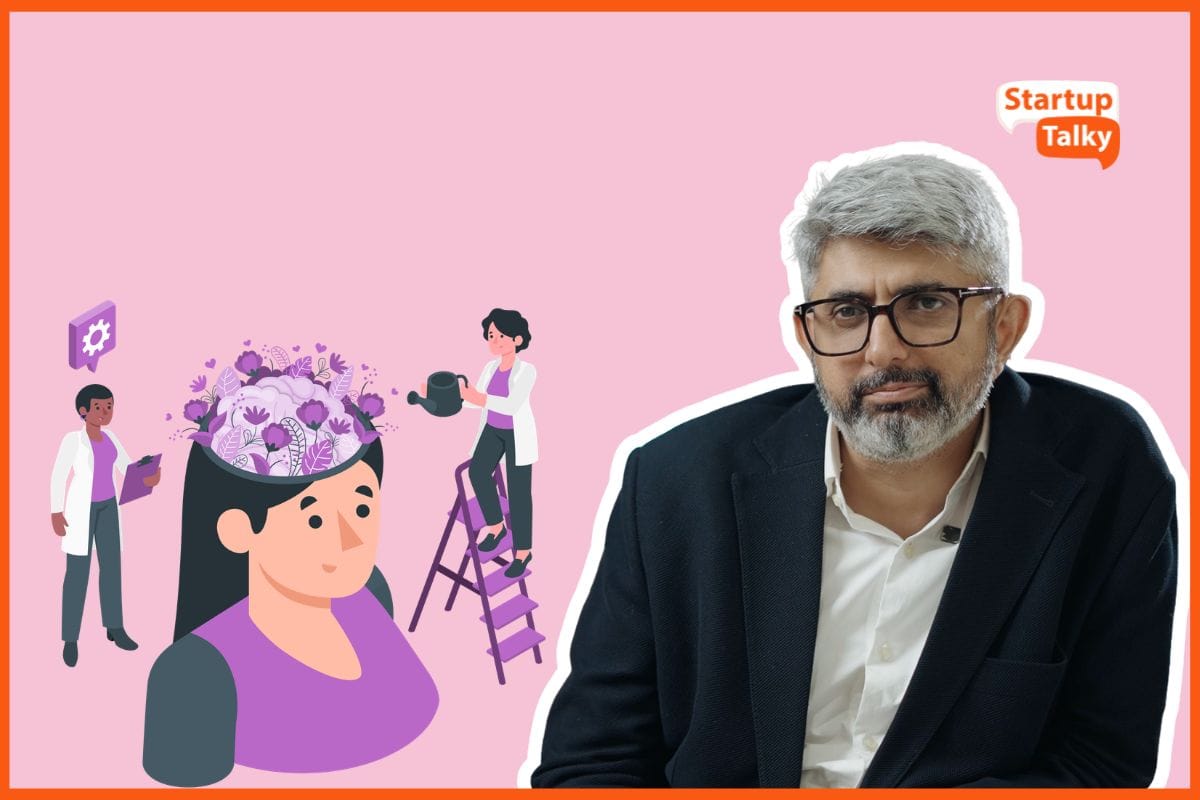
This article has been contributed by Dr. Amit Malik, Founder & CEO, Amaha, mental health organization.
India’s mental healthcare industry is projected to grow at a CAGR of around 18–22% over the next decade, driven by rising demand, increasing awareness, and expansion of digital health platforms. With nearly 190–200 million people requiring support and a significant shortage of professionals, the sector’s growth will be fuelled by tech-enabled, integrated care models, making mental healthcare more accessible, scalable, and continuous in the future.
Mental Healthcare in India: From Awareness to Action
Over the last few years, mental healthcare in India has undergone a quiet but meaningful shift. By 2025, the conversation had clearly moved beyond awareness. Stigma, while still present, was no longer the primary barrier.
The more pressing questions became practical ones: How does care actually work once someone seeks help? What happens when symptoms escalate? And who supports families when care needs go beyond occasional outpatient visits?
In many ways, 2025 was the year mental health moved from intent to execution.
From Fragmented Services to System-Level Thinking
For a long time, our systems were built around isolated touchpoints. Therapy sessions existed separately from psychiatric care. Digital tools operated independently of clinical oversight. Hospitalisation, where it existed, often sat at the extreme end of the spectrum, disconnected from what came before and after.
Individuals and families were expected to navigate these transitions on their own, often during periods of vulnerability.
The Growing Burden on Families and Clinicians
As more people sought help, the limitations of this fragmentation became impossible to ignore. Families carried an increasing burden, managing crises at home while waiting for symptoms to become “serious enough” for escalation.
Clinicians worked hard within constrained structures, but continuity of care remained inconsistent. Trust in the system depended not just on access, but on what happened next.
The Need for Integrated Mental Healthcare Systems
What became clear in 2025 is that mental healthcare cannot function as a collection of standalone services. It must operate as a coordinated system.
Integrated, end-to-end models of care began to feel less aspirational and more essential. People do not experience mental health challenges in neat categories. Needs change over time, often unpredictably.
Effective systems allow individuals to move smoothly between levels of support digital guidance, outpatient care, crisis intervention, and structured inpatient settings without losing context or continuity. When this integration works, it reduces delays, improves safety, and restores a sense of predictability for both individuals and their families.
Role of Technology in Expanding Access
Technology played a critical role in this transition. Digital tools expanded reach, lowered entry barriers, and helped people recognise when they needed support.
In a country with a severe shortage of trained professionals, this widening of access was necessary. But 2025 also reinforced an important lesson: access alone is not enough.
Balancing Technology with Clinical Rigor
Technology is most powerful when it strengthens clinical rigour rather than bypassing it. Systems that supported structured assessments, shared records, supervision, and coordinated decision-making showed far greater promise than tools operating in isolation.
The conversation matured from “digital versus human” to a more nuanced understanding of how technology can serve human care without diluting it.
Scaling Mental Healthcare Without Losing Quality
As mental healthcare began to scale, another tension came into focus: growth versus depth.
Expanding reach quickly can come at the cost of consistency if governance, training, and supervision do not keep pace. In 2025, it became evident that sustainable scale depends on strong clinical frameworks, multidisciplinary collaboration, and shared standards that travel with the individual across settings.
Building Trust Through Consistency and Continuity
This balance between scale and depth is not just an operational challenge; it is a trust issue. People seek mental healthcare at moments of vulnerability. Inconsistent experiences erode confidence not only in providers, but in the system as a whole.
Building trust requires predictability, transparency, and continuity qualities that only integrated ecosystems can reliably deliver.
2026 Outlook: Towards a Unified Mental Health Ecosystem
Looking ahead to 2026, the next phase of mental healthcare in India will likely be defined by consolidation rather than experimentation. The focus will shift from adding new entry points to strengthening the links between them.
Hospitals, outpatient centres, digital platforms, workplaces, schools, and community networks will need to function as parts of a coherent whole.
The Evolving Role of Crisis Care and Families
Crisis intervention and structured inpatient support will play a more visible role in this ecosystem. Not as endpoints, but as stabilising interventions that connect seamlessly back into community-based care.
Equally important will be recognising families as stakeholders in recovery, not just informal caregivers expected to absorb the system’s gaps.
Conclusion: Building Sustainable and Humane Mental Healthcare
The opportunity ahead is significant. India has the chance to build mental healthcare systems that are preventative, responsive, and continuous systems that meet people where they are and evolve as their needs change. Doing so will require investment, collaboration, and a willingness to move beyond fragmented solutions.
2025 showed us what is possible when intent turns into action. 2026 will test whether we can translate that momentum into durable, humane, and trustworthy systems of care. The measure of success will not be how many people we reach, but how well we support them and their families across the full arc of mental health and recovery.
 Apoorva Bajj