Motorsport, Mobility and Skill Development: What 2025 Taught Us and What 2026 Demands
Motorsport in India is shifting from passion to profession. With EV growth and demand for advanced engineering skills, it’s emerging as a serious career path with global opportunities and strong future potential.
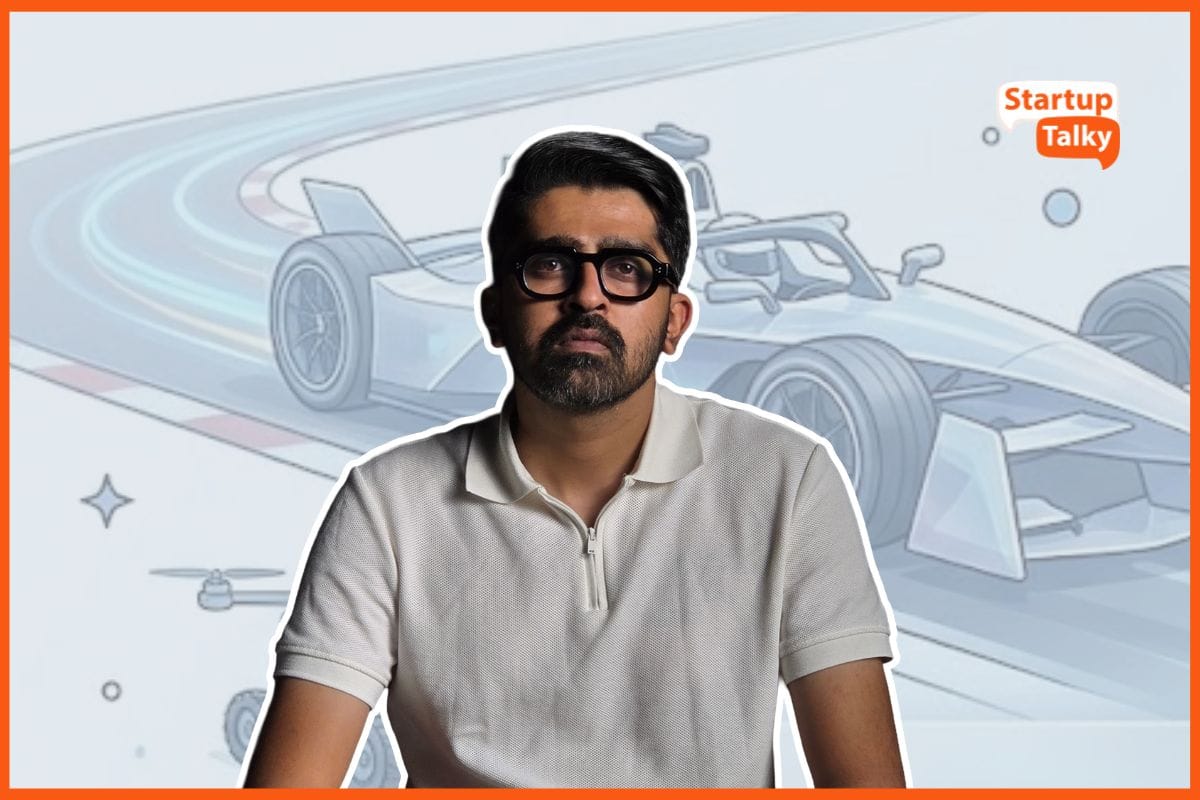
This article has been contributed by Omkar Rane, Founder, United Motorsports Academy & D&O Motorsports.
The motorsport and high-performance mobility market is set to grow steadily in the coming years. Globally, it is expected to cross $15 billion by 2032, while India’s segment could nearly double by 2035, driven by rising tech adoption and participation. This growth will be powered by demand for advanced engineering, data, and simulation-based skills, making the industry more specialised and future-ready.
Motorsport in India: From Aspiration to Career Path
For decades in India, motorsport existed largely as an aspiration without access. It was admired, followed, and discussed, but rarely viewed as a realistic career pathway. In 2025, that perception began to shift more substantively.
Motorsport and high-performance mobility started being seen not just as passion-driven pursuits, but as serious, skill-led professions connected to engineering, data, and global opportunity.
2025: The Year of Intent and Active Participation
What defined 2025 was intent. Young Indians were no longer engaging with motorsport only as spectators. Students, early-career engineers, working professionals, and even Indians pursuing higher education abroad actively sought hands-on exposure, international benchmarks, and applied learning environments. This shift signalled a move away from passive fascination toward purposeful preparation.
India’s Engineering Talent vs Employability Gap
This change must be viewed in the context of India’s broader technical education landscape. According to the All India Council for Technical Education (AICTE), India approved over 1.6 million engineering seats for the academic year 2024–25, with annual enrolments consistently exceeding 1.2 million students across engineering disciplines.
India remains one of the world’s largest producers of engineers. However, multiple government and industry reviews have repeatedly highlighted that employability in specialised, high-pressure domains depends not on volume alone, but on application-ready skills.
Motorsport: Where Theory Meets Real-World Execution
Motorsport sits precisely at this intersection. It is an environment where theoretical knowledge must translate into execution under pressure. Engineers are required to interpret live telemetry, respond to mechanical and performance issues in real time, and coordinate across multiple functions where decisions have immediate consequences.
In 2025, this reality resonated strongly with young engineers who increasingly questioned purely classroom-led education models.
Rise of Electric Vehicles and Skill Alignment
Another important shift was the growing alignment between motorsport skills and India’s evolving mobility ecosystem. Data published by the Society of Indian Automobile Manufacturers (SIAM) and the Ministry of Road Transport & Highways (VAHAN dashboard) shows that India recorded over 2 million electric vehicle registrations in FY 2024–25, spanning two-wheelers, passenger vehicles, and commercial segments.
This transition toward electrification and software-driven vehicles has intensified demand for engineers skilled in systems thinking, data interpretation, thermal management, simulation, and performance optimisation.
Motorsport as a High-Performance Engineering Testbed
These are precisely the competencies motorsport environments develop by default. Modern motorsport is no longer purely mechanical. It is deeply analytical, integrating vehicle dynamics, aerodynamics, energy management, and data-driven decision-making.
In this sense, motorsport functions as a high-pressure testbed for skills that are increasingly relevant across electric mobility, advanced automotive R&D, and performance engineering roles.
Improved Access to Global Opportunities
2025 also marked a change in access. International exposure, once perceived as unattainable, began to appear more structured and achievable. Global training pathways, short-term immersions, and collaborative models lowered both psychological and logistical barriers.
When aspirants can clearly see how skills map to global standards, ambition becomes grounded in preparation rather than hope.
Changing Mindset: Demand for High-Performance Careers
Lifestyle and mindset shifts also played a role. Today’s aspirants are drawn to careers that are intense, accountable, and globally connected. Motorsport mirrors the realities of modern high-performance work environments: fast feedback loops, interdisciplinary collaboration, continuous learning, and decision-making under pressure.
These attributes align closely with the expectations of a generation shaped by competitive, outcome-driven ecosystems.
2026 Outlook: Hybrid Learning and Global Integration
Looking ahead to 2026, the direction is becoming clearer. Motorsport and mobility training will increasingly adopt hybrid models combining on-ground exposure with remote data work, simulation, and mentorship.
Global integration will deepen not only through travel but through shared platforms, collaborative engineering teams, and common performance benchmarks.
India’s Growing Role in Global Motorsport Talent
India’s role in the international motorsport and mobility talent pipeline is also set to expand not as a novelty market, but as a credible contributor of engineers who understand both hardware and data.
The challenge now is quality. Scale without rigour will dilute impact. Depth, consistency, and accountability will define long-term relevance.
Conclusion: From Aspiration to Execution
If 2025 was the year aspiration found structure, 2026 must be the year execution gains consistency. Motorsport, mobility, and high-performance engineering are no longer fringe interests. They are emerging as viable, aspirational career pathways for a generation that values skill, speed of learning, and global relevance.
The opportunity ahead is not simply to train more people, but to train them better. And if India gets that right, its presence in global motorsport and mobility ecosystems will be defined not by novelty, but by competence.
 Tripti Agarwal