
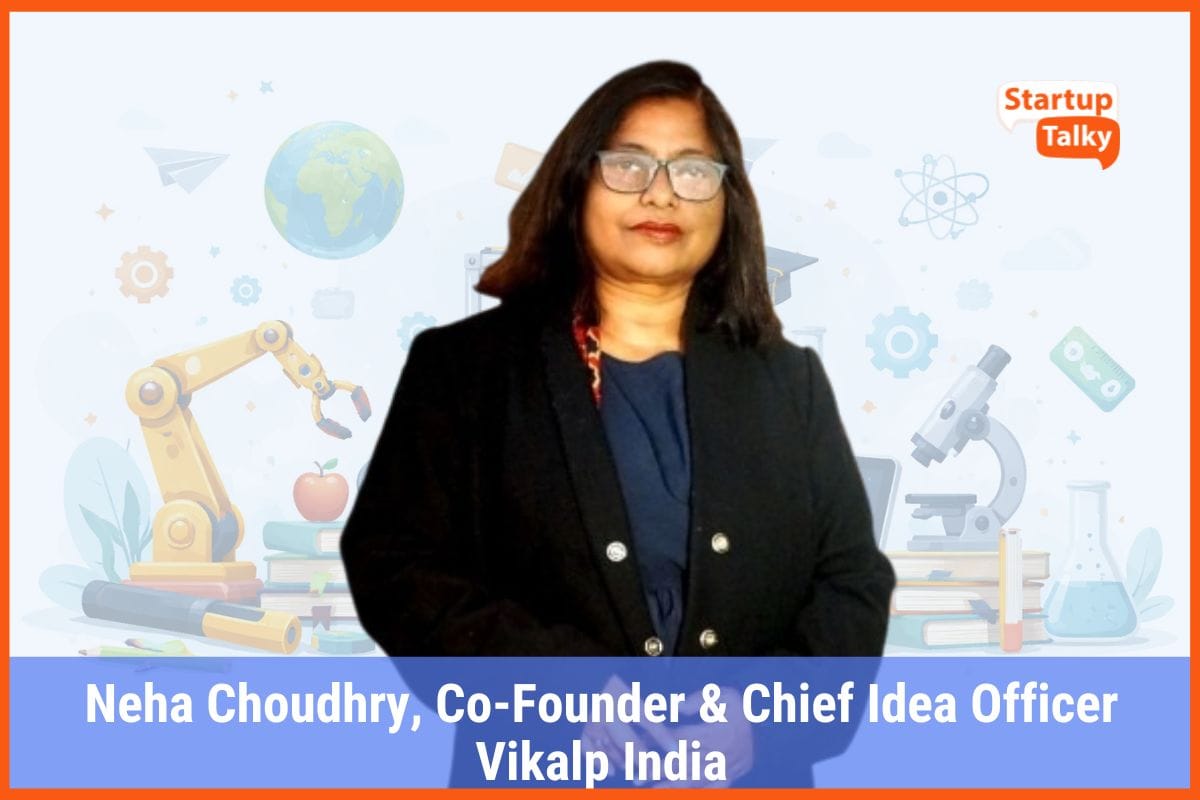
How Neha Choudhry is Empowering Girls in STEM with Hands-On Learning at Vikalp India
Neha Choudhry explains how Vikalp India is transforming STEM education for girls through hands-on kits, teacher training, and accessible learning—turning curiosity into confidence.
India continues to face a significant gender gap in STEM education, particularly during the transition from middle to secondary school. Studies show that only 14–18% of women pursue STEM careers in India, and a large number of girls drop out of science streams between the ages of 11–15 due to lack of exposure, confidence, and practical learning opportunities.
At the same time, the EdTech market in India is projected to reach $10 billion by 2025, with experiential and hands-on learning emerging as a key growth driver. As education shifts from rote learning to application-based models, companies focusing on experiential STEM learning are playing a crucial role in bridging both learning gaps and gender disparities.
In this International Women’s Day series, Neha Choudhry, founder of Vikalp India, shares how her platform is making STEM education more accessible, engaging, and inclusive for girls across India.
Bridging the STEM Gap: Making Science Practical for Girls
StartupTalky: Vikalp India focuses on experiential learning and hands-on education. How do your learning kits and programs specifically address the gap in STEM education for girls in India, where dropout rates remain high after middle school?
Neha Choudhry: Across India, girls’ limited participation in STEM is not due to lack of talent but lack of exposure, confidence and relevance. After middle school, many lose interest because science is taught in an abstract, exam-focused way that feels disconnected from real life.
Vikalp India addresses this by making STEM hands-on and experiential. Through learning kits and programs, students don’t just read concepts, they build, test and experiment. Whether it’s creating a working model or exploring circuits, science becomes something they can do, not just memorize.
This is especially impactful for girls, who often lack access to such tools. By engaging them in problem-solving, creativity and exploration, Vikalp helps turn hesitation into curiosity and confidence. When girls discover they can build and create, they begin to see themselves not just as learners but as future innovators.
Breaking Gender Bias Early: Redefining STEM for All
StartupTalky: In many Indian households, science kits and building toys are still seen as 'boys' things.' How does Vikalp India consciously design and market its products to break this gender bias from an early age?
Neha Choudhry: Gender bias in STEM begins early, through toys, expectations and subtle cues that label building and technology as “for boys.” Vikalp India addresses this by designing gender-neutral, hands-on learning kits that are open, curiosity-driven and rooted in real-life application.
Students explore concepts like renewable energy, simple machines and basic electronics by building and testing functional models. Kits are delivered to students’ homes and supported through guided live sessions, creating a safe and structured environment where girls can participate confidently. As they build and experiment, curiosity is sparked, leading to questions, deeper exploration and growing confidence in using scientific tools and concepts.
Vikalp also engages parents and teachers through workshops and demonstrations, helping shift perceptions as they see girls actively building, experimenting and explaining concepts.
By ensuring equal access to tools and experiences from an early age, Vikalp helps girls see STEM not as intimidating but as something they can explore, enjoy and grow in.
From Hesitation to Confidence: A Story of Transformation
StartupTalky: Can you share a specific story of a young girl who used Vikalp India's learning aids and went on to develop a genuine interest in science or technology that surprised her own family?
Neha Choudhry: One of Vikalp India’s hands-on learning sessions tells the story of a quiet girl who struggled with math and science. Teachers often saw her withdrawn, finding subjects too abstract to engage with.
During a workshop, students were given a simple kit to build an electrical circuit and understand current flow. Initially hesitant, she avoided even touching the components. But with gentle, step-by-step guidance, she began connecting the battery, wires and bulb. The moment her circuit worked sparked a transformation. Her hesitation turned into curiosity. She started asking questions, why current flows in a loop, what happens with another bulb and how brightness changes. Science became something she could see and touch.
Over time, her teachers noticed a remarkable shift. She actively participated, built models at home and even explained concepts to her surprised parents. This is the impact of experiential learning, turning fear into curiosity and curiosity into confidence.
Bringing STEM to Underserved Schools: Portable Labs for All
StartupTalky: Rural and semi-urban schools in India often lack lab infrastructure. How is Vikalp India making experiential learning accessible to girls in these underserved schools where traditional teaching methods dominate?
Neha Choudhry: Many rural and semi-urban schools lack proper laboratory space, limiting effective STEM learning. Science is often confined to textbooks, blackboard diagrams and theory, making it feel abstract, especially for girls with little exposure to tools.
Vikalp India addresses this by introducing experiential learning kits that act as portable mini-labs. These kits allow students to build models, run experiments and understand concepts like electricity, simple machines and basic electronics within regular classrooms. The guided approach is equally important. Teachers follow a structured process where students assemble models, test ideas and discuss underlying concepts.
This ensures experiential learning complements the existing curriculum rather than replacing it. For girls in underfunded schools, who may lack access to labs or support at home, this method is transformative. Hands-on learning reduces fear, encourages trial and error and builds confidence. Vikalp India’s mission is simple: a child’s interest in science shouldn’t depend on resources or location but on opportunity.
Keeping Girls Engaged in STEM During Critical Years
StartupTalky: Research shows that girls lose interest in STEM subjects between ages 11-15. What does Vikalp India do differently in its product design and curriculum to keep girls engaged during this critical window?
Neha Choudhry: Most students, especially girls, lose confidence in STEM between ages 11 and 15, not due to lack of ability but because subjects feel abstract, test-focused and disconnected from real life.
Traditional methods relying on textbooks and lectures often make STEM seem difficult and uninteresting. Vikalp India takes a different approach. Its learning kits and curriculum make STEM practical, engaging and exploratory. Students don’t just study theory, they build models, experiment with circuits and solve real-world problems. Seeing concepts in action makes science less intimidating and more exciting.
A key element is the sense of achievement students feel when they create something or solve problems through trial and error. This builds confidence, especially for girls. The programs also emphasize collaboration, creativity and guided inquiry over competition.
With learning kits at home and online teacher support, students continue exploring beyond classrooms. Vikalp India’s goal is to show that STEM is not about memorization but about curiosity, creativity and problem-solving.
Empowering Educators: Training Teachers for Experiential Learning
StartupTalky: Beyond selling products, does Vikalp India run any teacher training or community programs that specifically encourage women educators to adopt experiential learning methods in their classrooms?
Neha Choudhry: Vikalp India believes learning kits alone cannot transform education. Real change happens when teachers are confident using experiential methods and understand how hands-on activities improve learning.
That’s why teacher training is central to its approach. Vikalp conducts orientations, workshops and demo sessions where teachers learn to explain concepts through experiments, models and guided activities instead of just lectures.
To strengthen this, Vikalp has built a Teacher Training Academy that helps educators shift from traditional teaching to facilitation, encouraging students to explore, question and experiment.
It also runs a Facilitator Enrichment Program, offering mentoring and hands-on support so teachers can integrate experiential learning into daily lessons. This ecosystem is especially impactful for women teachers, who form a large part of the workforce.
Their classrooms become more open and encouraging for girls. Vikalp ultimately empowers teachers to build a culture of curiosity, where students actively explore and learn.
Closing the Gender Gap: The Role of EdTech and Experiential Learning
StartupTalky: This Women's Day, what is your vision for how EdTech and experiential learning companies like Vikalp India can contribute to closing the gender gap in STEM education across India?
Neha Choudhry: Closing the gender gap in STEM isn’t just about encouraging girls, it requires changing how science is taught. Many girls lose interest not due to lack of ability but because STEM feels abstract, test-driven and disconnected from real life.
Vikalp India addresses this by making learning practical, engaging and relevant. Through experiential kits, guided activities and discovery-based teaching, students build models, conduct experiments and see how concepts work in reality. Science becomes less intimidating and more empowering when girls can explore it hands-on.
Accessibility is equally critical. Practical STEM learning shouldn’t be limited to well-funded urban schools. Vikalp brings it to rural and semi-urban areas through portable kits, online guidance and teacher training. This ensures girls everywhere have equal opportunities to engage with science.
Empowering teachers is key. Through structured programs, educators become facilitators of curiosity, creating classrooms where girls feel confident to question, experiment and actively participate in STEM learning.
 Apoorva Bajj