Apple Takes Legal Action Against OpenAI Over Alleged ChatGPT Hardware Trade Secrets Misuse
Apple has sued OpenAI in federal court in California, claiming the AI company exploited trade secrets to manufacture hardware for its popular chatbot, the New York Times reported. The complaint claims that former Apple executives Tang Tan and Chang Liu took proprietary hardware information.
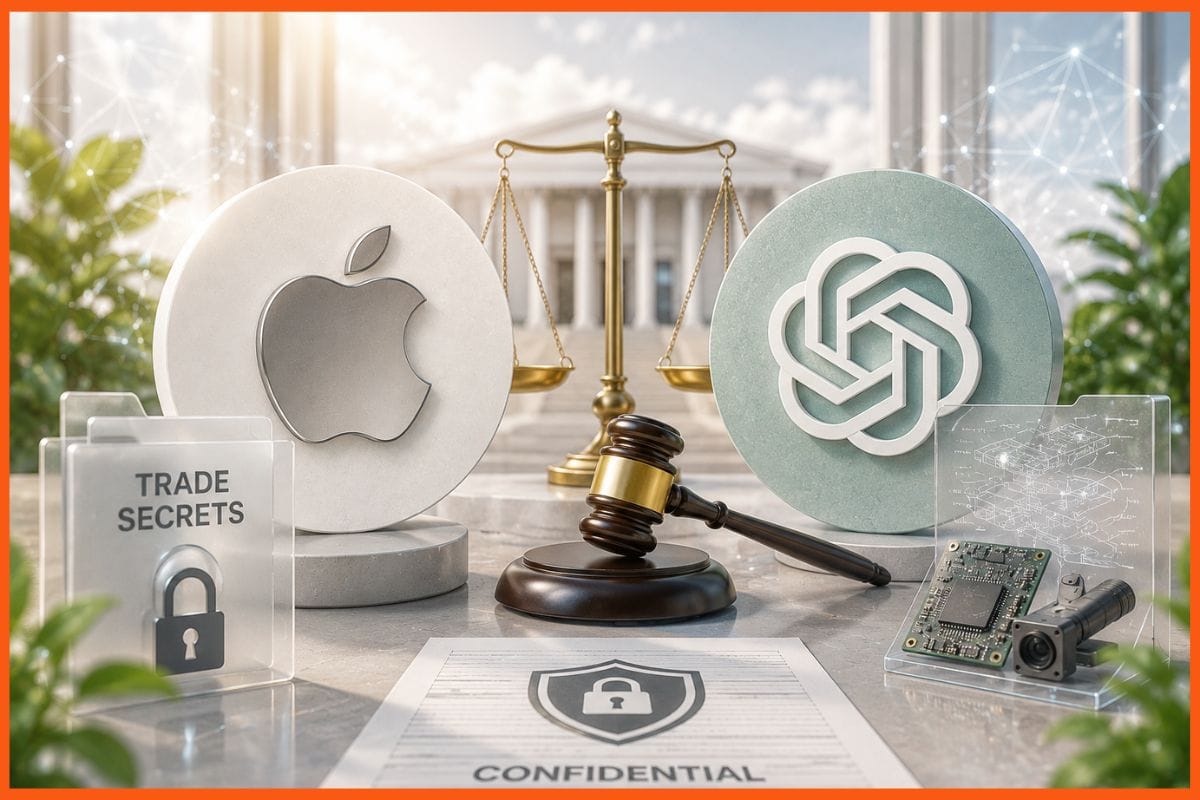
In an effort to develop its own hardware for ChatGPT, Apple accused OpenAI of stealing trade secrets on July 10th. This is a huge break in the collaboration between Apple and the AI firm, according to reports. Apple said in its federal court case in California that OpenAI engaged in a systemic pattern of misconduct that included the theft of its trade secrets.
According to the document, this case revolves around former Apple employees who allegedly stole Apple's trade secrets and used them to benefit OpenAI. Apple is bringing this lawsuit to put a permanent full stop on this illegal development.
Former Employees of Apple Involved in Theft
Defendants also include two individuals who were once employed by Apple but are now employed by OpenAI. One of them is Tang Tan, who is currently the chief hardware officer at OpenAI and was involved in the design of the iPhone, Apple Watch, and iPod. The second is Chang Liu, an ex-electrical engineer who worked for Apple and was supposedly responsible for some of the company's most secretive product development projects. Liu recently departed Apple to become a part of OpenAI. OpenAI has been tight-lipped about the nature of the device it is developing.
But it has framed it as an attempt to discover an alternative to conventional products and interfaces for interacting with AI. It's all a part of a larger effort to bring the most recent AI developments into physical form, ten years after companies like Amazon and Google brought screen-free talking speakers into people's homes. The attempt was allegedly developed in part on Apple-stolen information, according to the lawsuit.
The lawsuit claimed that OpenAI's hardware company, which was just starting off, is now completely unsustainable due to its reliance on stolen trade secrets. A security breach may have exposed some of Apple's sensitive data, the company claimed. The company then found out that former Apple employees who went to work for OpenAI had a history of stealing trade secrets from the company.
Modus Operandi of Theft
The complaint claims that while employed at OpenAI, Liu and Tan gained access to Apple's proprietary data and files. Among the charges, Apple asserts that Liu used an Apple-issued device that he retained after leaving the company to access and download multiple secret files pertaining to hardware. Additionally, it claims that when Tan was still employed by Apple, he instructed prospective seekers to bring "Actual parts" from Apple to their OpenAI interviews.
The lawsuit states that Apple contacted OpenAI in February to express its concerns during the early stages of its investigation, but that OpenAI did not react. In a statement released on July 9th, an Apple representative assured the public that the tech giant is doing everything in its power to protect the efforts and innovations of its employees.