Bharti Airtel Overtakes HDFC Bank to Become India’s Second Most Valuable Company
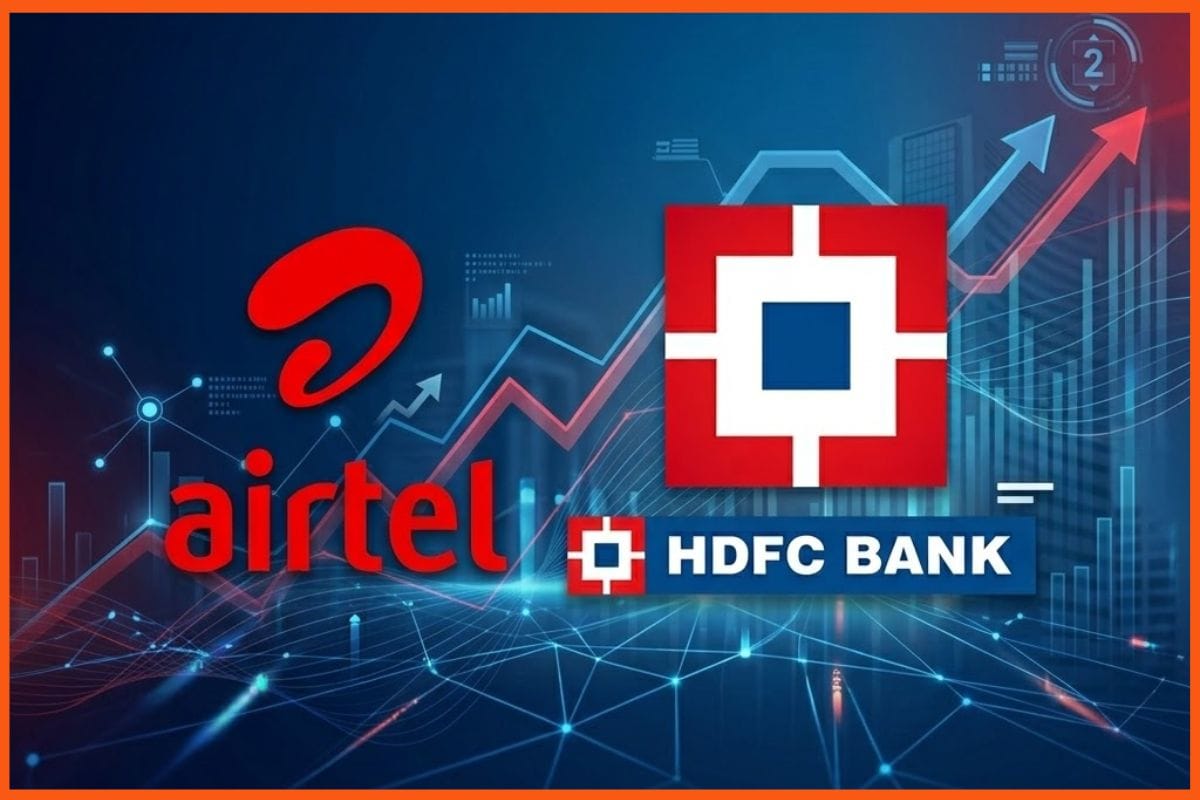
Bharti Airtel Ltd. has overtaken HDFC Bank Ltd. to become India's second most valued listed company by market capitalisation on Monday, May 18, 2026, as the telecom major's shares climbed for a fourth consecutive session while the private lender remained under pressure over its chairman succession plan. The Sunil Bharti Mittal-led firm now trails only Reliance Industries on the domestic bourses.
As of May 18, Bharti Airtel's market capitalisation stood at Rs 11.78 lakh crore, narrowly edging past HDFC Bank's Rs 11.74 lakh crore. Reliance Industries retained the top slot with a market capitalisation of approximately Rs 18.08 lakh crore. Airtel shares were trading 2.1% higher at Rs 1,946.6, near the day's high, while HDFC Bank shares were down 0.4% at Rs 764.5 after recovering from intraday lows.
Bharti Airtel claims No.2 spot: How it beat HDFC Bank to become India's second most valuable company
The milestone reflects a sharp divergence in investor sentiment between India's leading telecom operator and its largest private lender. Bharti Airtel shares are down 8% so far in 2026, while HDFC Bank shares have declined 23% over the same period. Over a five-year horizon, the gap is even starker: Airtel shares have surged 270%, while HDFC Bank has delivered a comparatively modest 49% return, capturing what analysts describe as a structural re-rating of Indian telecoms against a banking heavyweight struggling to reclaim its pre-pandemic valuation dominance.
The rest of India's top 10 listed companies by market capitalisation includes ICICI Bank, State Bank of India, Tata Consultancy Services, Bajaj Finance, Larsen & Toubro, Hindustan Unilever and Life Insurance Corporation.
Why Dalal Street is bullish on Airtel
Investor sentiment around Airtel has been supported by management commentary and expectations of sustained growth in its mobility business. During the company's March quarter earnings interaction, the management reiterated its focus on improving Average Revenue Per User (ARPU), saying it plans to intensify efforts across all growth levers, with premiumisation and migration to postpaid services expected to drive gains.
Brokerages have echoed the optimism. BofA Securities, with a target price of Rs 2,320, said the risk-reward remains firmly in Airtel's favour. "We see Bharti witnessing good market share gains, healthy momentum in non-cellular business segments and an upside optionality from data center business," the brokerage noted, adding, "We expect Bharti's FCF to continue to inch up going ahead as competition is stable-to-declining and we don't foresee any material capex increase ahead."
JP Morgan, which has a March 2027 price target of Rs 2,250, identified three catalysts beyond 5G premiumisation. "Growth in adjacencies, deleveraging and rising dividends should be the key catalysts for the stock," the bank said. It values India wireless at 12x EV/EBITDA, Home broadband at 12.5x, and Digital TV at 10x. Goldman Sachs retained a Buy rating with a 12-month DCF-based target of Rs 2,210, trimmed from Rs 2,250, citing weakness in the towers and DTH segments.
Q4FY26 results and dividend signal
The development comes on the back of broadly credible Q4FY26 numbers. Consolidated revenues and EBITDA came in 1–3% ahead of UBS estimates and consensus, though composition was uneven. Africa delivered a standout performance with revenues up 41% year-on-year, or 17% in constant currency, while India Home broadband grew 9.5% quarter-on-quarter. India mobile revenues, however, grew just 8% year-on-year and 0.6% sequentially.
Airtel announced a dividend of Rs 24 per share for FY26, up from Rs 16 in FY25 and ahead of consensus expectations of Rs 20. The company also announced a share swap agreement under which it will acquire Indian Continent Investment Ltd's 16.31% stake in Airtel Africa in exchange for issuing 146.7 million new shares, representing approximately 2.4% dilution.
Mittal eyes 51% control
Bharti Enterprises Chairman Sunil Bharti Mittal outlined a long-term ownership ambition for the group, saying he expects Bharti Telecom to regain a controlling stake of 51% in the business over the next decade, up from slightly over 40% currently. Promoter holding stood unchanged at 48.87% as of the March 2026 quarter.
HDFC Bank under succession cloud
HDFC Bank reported a stable March quarter performance with steady asset quality metrics. However, the lender's stock has remained under pressure amid concerns linked to its chairman succession plan, with shares declining sharply after the resignation of part-time Chairman Atanu Chakraborty. The bank's management has repeatedly maintained that there are no governance-related concerns at the lender.
FAQs
1. What is Bharti Airtel's current market capitalisation?
As of May 18, 2026, Bharti Airtel's market capitalisation stood at Rs 11.78 lakh crore, making it India's second most valued listed company.
2. Which company is India's most valuable listed firm?
Reliance Industries remains India's most valuable listed company with a market capitalisation of approximately Rs 18.08 lakh crore.
3. How much have Bharti Airtel shares gained over the past five years?
Bharti Airtel shares have surged 270% over the past five years, while HDFC Bank delivered a 49% return over the same period.
4. What is the brokerage target price for Bharti Airtel?
BofA Securities has a target of Rs 2,320, JP Morgan a March 2027 target of Rs 2,250, and Goldman Sachs a 12-month target of Rs 2,210.
5. What dividend has Bharti Airtel announced for FY26?
Bharti Airtel announced a dividend of Rs 24 per share for FY26, up from Rs 16 in FY25 and ahead of consensus expectations of Rs 20.
6. Why are HDFC Bank shares under pressure?
HDFC Bank shares are down 23% in 2026 amid concerns over its chairman succession plan, following the resignation of part-time Chairman Atanu Chakraborty.
7. What is Sunil Bharti Mittal's ownership plan for Airtel?
Mittal said he expects Bharti Telecom to regain a controlling 51% stake in the business over the next decade, up from slightly over 40% currently.