Indian Walker Raises Pre-Seed at ₹20 Crore Valuation
Indian Walker, started by a former Rapido captain who could not find a bag that survived Delhi's roads, has raised a pre-seed from Palette Wealth Management at a ₹20 crore post-money valuation. The round size has not been disclosed.
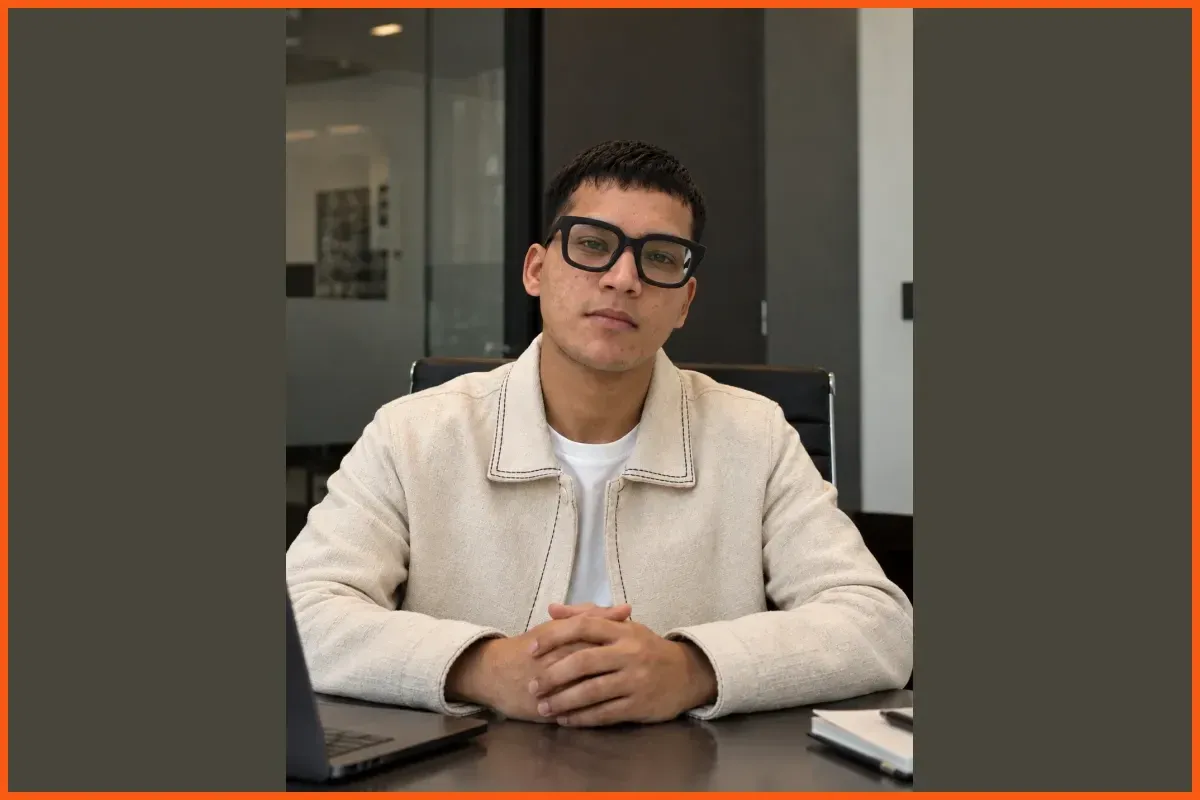
Md. Sakib lost his job during Covid and started driving for Rapido on Delhi's roads. His bag went with him through monsoon rides, pillion seats and packed metro coaches, and nothing he could afford survived it while looking like something he wanted to be seen carrying.
In July 2025 he started making the bag he could not find. Indian Walker has now raised a pre-seed round from Palette Wealth Management at a post-money valuation of ₹20 crore.
How much was actually raised has not been disclosed.
What the missing number hides
A valuation without a round size tells you what a slice is worth but not how big a slice changed hands. At ₹20 crore post-money, ₹1 crore buys 5% and ₹4 crore buys 20%, and those are different companies afterwards with different amounts of runway. It is a reasonable thing for a young company to keep to itself, and it also means nobody outside can work out how long this money lasts.
What is known is where it goes: inventory first, then more product lines and additions to the Level Up collection, then hiring across marketing, social and operations.
The target is around forty times the current rate
Indian Walker says its Stride backpack has sold more than 10,000 units since launching in July 2025, with core backpacks priced between ₹2,000 and ₹4,000. Over the next 24 months it is targeting ₹100 crore in annual recurring revenue and a community of more than one lakh customers.
Put those two numbers beside each other. Ten thousand units across roughly fourteen months is somewhere near 700 bags a month. ₹100 crore a year is about ₹8.3 crore a month, which at a ₹3,000 average price means selling close to 28,000 bags a month. That is roughly forty times the current pace, inside two years, and it is the single hardest thing in the announcement. It is not an unreasonable ambition for a brand this young, because small bases move fast, but it is worth being clear about the size of the jump rather than letting "₹100 crore ARR" pass as a round number.
The distribution plan is what has to carry it. The brand sells only through its own website today and will add Amazon, Flipkart and Myntra next quarter, followed by quick commerce. That is the step that turns a D2C brand into a retail one, and it is where most of the volume would have to come from.
"I didn't start Indian Walker in a boardroom. I started it on Delhi's roads, with my whole day on my back. Streetwear gave my generation sneakers and tees that said who we are, but nobody made the bag," said Md. Sakib, Founder and CEO of Indian Walker.
Bags are a kinder inventory business than shoes
Every physical consumer brand at this stage turns most of its funding into stock sitting in a warehouse. Bags have one structural advantage over most of them: there are no sizes.
A shoe brand launching one design in one colour has to make seven or eight of them, because a half size out is unwearable, and the unsold sizes at the end of a season are the write-down that quietly kills small footwear labels. A backpack is one item. One design in one colourway is one thing to manufacture, hold and sell, and it fits every customer who wants it. That makes the inventory maths considerably more forgiving, which matters for a company putting a significant share of a pre-seed into stock.
The investor's own framing is that demand has been running ahead of inventory, which is the good version of this problem and the reason the money goes there first.
The studio behind it has been through the worst version of this
Indian Walker is built inside CoFounder Circle, a consumer venture studio founded by Darpan Sanghvi. Sanghvi built the Good Glamm Group into a beauty unicorn on the back of eleven acquisitions, and then watched it come apart under debt, integration problems and an inability to reach profitability. It collapsed in July 2025, the same month Indian Walker was founded.
The studio says openly that it is built on both halves of that experience, which is an unusual thing to volunteer in a company description and probably an honest one. A consumer roll-up that scaled too fast and broke is a specific education, and it is the kind that tends to make someone cautious about exactly the things a young brand is tempted by: too many categories, too many channels, growth bought rather than earned.
Whether that caution actually transmits into a portfolio company is a different question, and one nobody can answer from a press release.
What the story can and cannot do
The Rapido-captain-to-founder arc is real, it is unusually well suited to a brand whose tagline is MOVE UP, and Rapido co-founder Pavan Guntupalli has put his name to it publicly.
It will also only take the company so far. A founder story is the reason a first customer tries an unknown ₹3,000 backpack instead of a familiar one. It is not the reason 28,000 people a month buy it. That job belongs to whether the bag survives a monsoon better than the alternatives, and whether the brand can hold a shelf on Myntra against D2C labels with far more capital behind them.
Common questions
How much did Indian Walker raise?
The amount has not been disclosed. The company has said the round was raised from Palette Wealth Management at a post-money valuation of ₹20 crore.
What does Indian Walker sell?
Streetwear-styled backpacks and everyday carry for young Indian consumers, with core backpacks priced between ₹2,000 and ₹4,000. Its Stride backpack has sold more than 10,000 units since July 2025.
Where can you buy it?
Currently through its own website. The company says it will launch on Amazon, Flipkart and Myntra next quarter, followed by quick commerce and other marketplaces.
Valuation, investor name, unit sales and quotes come from the company's announcement of 23 September 2026. Details of the Good Glamm Group's collapse are from contemporaneous reporting and the founder's own public statements.