FIFA's $1 Billion Club World Cup Bet, and the Saudi Money Behind It
FIFA put up a $1 billion prize pot for a brand-new 32-team Club World Cup, funded by a $1 billion broadcast deal that Saudi money quietly backstopped. Then more than 1.6 million seats sat empty. An expensive gamble that was cleverly de-risked, and what it is really for.

In the summer of 2025, FIFA launched the most expensive new product in its history: a 32-team Club World Cup, staged across the United States from 14 June to 13 July, with a $1 billion prize pot that could hand the winner up to $125 million.
It was a statement of ambition. It was also a financial puzzle, because the numbers only work once you follow where the money actually came from. The headline is a billion-dollar tournament. The story underneath is how FIFA arranged to take very little risk on it, and how much of the funding traced back to Saudi Arabia.
The Tournament, at a Glance
| Format | New 32-team Club World Cup |
| Host / dates | United States, 14 June to 13 July 2025 |
| Prize pot | ~$1 billion total |
| Prize split | ~$475M participation + ~$525M sporting performance |
| Winner's maximum | up to ~$125 million |
| Broadcast deal | DAZN, ~$1 billion for global rights (free to watch on DAZN) |
| Tickets distributed | ~2.49 million |
| Empty seats | ~1.67 million |
| Average attendance | ~39,557 per match |
Sources: FIFA, DAZN, ESPN, Swiss Ramble; figures rounded.
A Billion-Dollar Prize, Paid for by a Billion-Dollar Rights Deal
The eye-catching number is the $1 billion prize pot, split into roughly $475 million for showing up (participation) and $525 million for results (sporting performance), with the champion able to bank up to $125 million, more than many clubs earn from winning the Champions League.
What made that pot possible was a matching $1 billion broadcast deal with DAZN, the streaming platform, which took global rights and made the tournament free to watch. In effect, the broadcaster's cheque funded the players' prizes. For FIFA, that is the elegant part: the single biggest cost of the new event was covered by its single biggest revenue line before a ball was kicked.
Follow the Money: The Saudi Loop
Here the story turns, because the DAZN cheque did not come from nowhere.
Shortly after the broadcast deal was signed, Saudi Arabia's Public Investment Fund (PIF) bought a roughly 10% stake in DAZN for about $1 billion. In other words, Saudi capital flowed into the broadcaster at almost exactly the moment the broadcaster committed a billion dollars to FIFA's tournament. The same fund was also a Club World Cup sponsor, and it owns about 75% of Al Hilal, one of the 32 clubs that played in it.
Then, about a week after the DAZN agreement, FIFA confirmed Saudi Arabia as host of the 2034 World Cup.
None of these facts is hidden, and FIFA would argue each is a separate, arm's-length transaction. But laid end to end, they describe a tournament whose prize money, broadcaster, a sponsor and one of its clubs all connect back to the same Saudi source, staged in the same window that the kingdom secured the game's biggest prize. That is the context part four of this series picks up.
 Shubham Kumar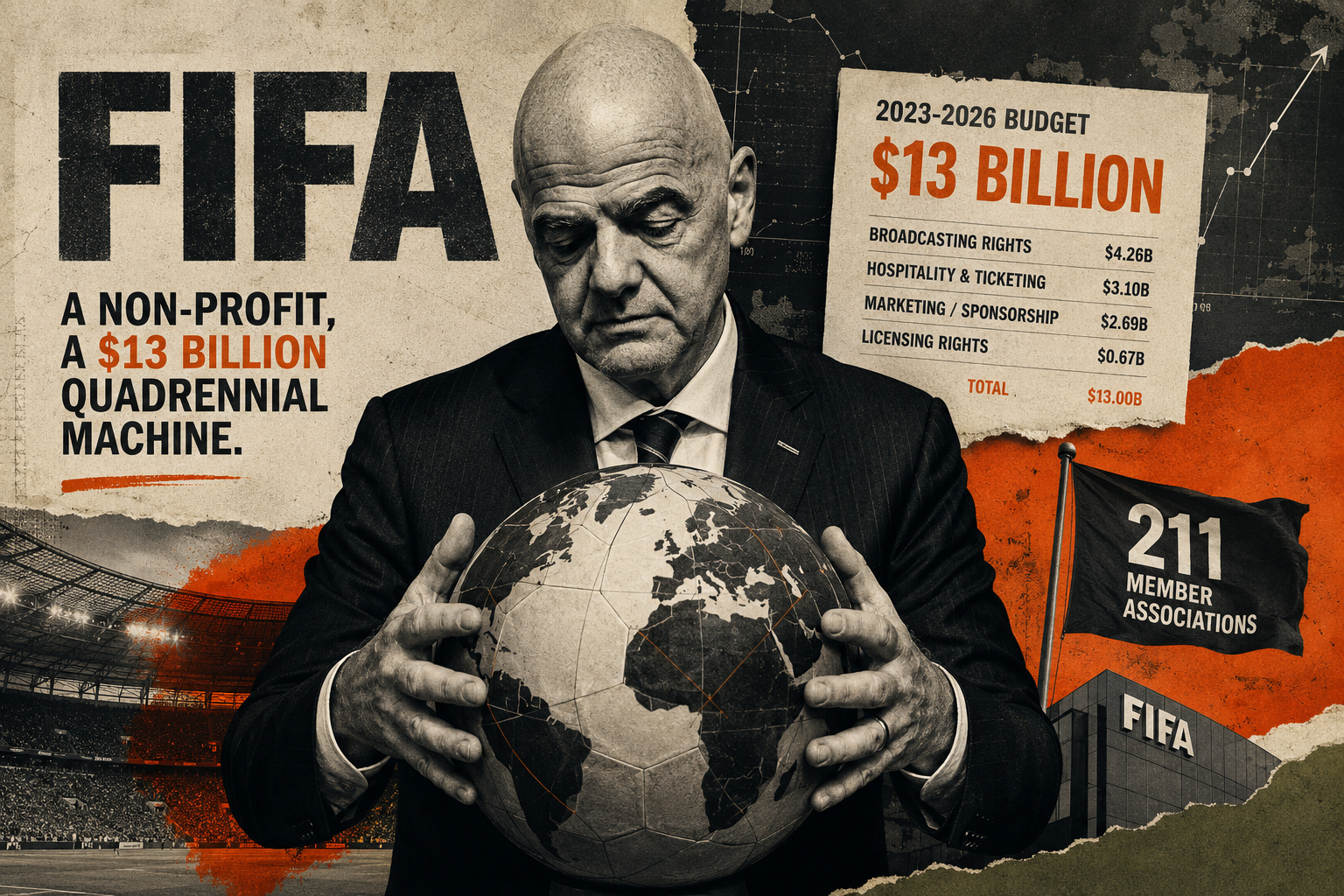
The Empty-Seats Problem
If the funding was the clever part, the demand was the awkward part.
FIFA distributed about 2.49 million tickets, but roughly 1.67 million seats sat empty, an average of about 39,557 per match in stadiums often built for far more. Several group-stage games drew sparse crowds; the smallest, Ulsan HD against Mamelodi Sundowns, had just 3,412 fans in the stands. FIFA cut prices aggressively through dynamic pricing as kickoff neared, the classic signal of supply outrunning demand.
The gap between an $80,000-seat showpiece and a 3,412-fan reality is the central tension of the whole experiment. A brand-new tournament, however well funded, cannot manufacture decades of accumulated meaning. Fans had not been taught to care yet, and many did not turn up.
The Player Revolt
The other resistance came from the people who actually play. Adding a month-long, 32-team tournament to an already saturated calendar drew sharp opposition from FIFPRO, the global players' union, and from domestic player bodies, who warned about workload, injury risk and a season with no real off-period.
That fight is not incidental. It is the opening skirmish in a larger war over who controls football's calendar, FIFA, which profits from more tournaments, or the leagues and players who bear the physical cost. The Club World Cup made that conflict concrete, and it is far from settled.
So Did the Bet Pay Off?
It depends on what FIFA was actually betting.
If the bet was this year's profit, the picture is mixed: the broadcast deal covered the prize pot, but the empty seats and discounted tickets undercut the gate and the spectacle. If the bet was to establish a permanent, billion-dollar off-year tentpole, then 2025 was a down payment, and the verdict is years away. FIFA de-risked the launch so thoroughly, with a guaranteed, externally-funded broadcast cheque, that it could absorb a soft first edition and try again.
That is the real shape of the gamble. FIFA spent big, but arranged for someone else to underwrite the spend, which means the financial downside was capped from the start. What it cannot buy so easily is legitimacy, the sense that this tournament matters. The money showed up. The crowds, and the players' goodwill, did not, at least not yet.
Shubham Kumar
If you have information related to this story, reach out through StartupTalky's tips line. Anonymity is the default.
FAQs
How much was the prize money for the 2025 FIFA Club World Cup?
The 2025 FIFA Club World Cup featured a total prize pool of $1 billion, with approximately $475 million allocated for participation and $525 million based on sporting performance. The winning club could earn up to $125 million.
Who funded the FIFA Club World Cup prize pool?
The prize pool was largely supported by FIFA's approximately $1 billion global broadcast rights agreement with DAZN, which secured worldwide streaming rights for the tournament.
What is the connection between Saudi Arabia and the tournament?
Saudi Arabia's Public Investment Fund (PIF) acquired an estimated 10% stake in DAZN for around $1 billion shortly after DAZN signed its broadcast agreement with FIFA. PIF was also a tournament sponsor and owns a majority stake in Al Hilal, one of the participating clubs.
Why were there so many empty seats at the Club World Cup?
Although FIFA distributed around 2.49 million tickets, approximately 1.67 million seats remained empty across the tournament. Several group-stage matches attracted low attendance, leading FIFA to reduce ticket prices through dynamic pricing.