

The Return of In-Store Shopping: Hybrid Black Friday 2026 Strategies
Explore the latest hybrid retail strategies for Black Friday 2026, from AI-powered shopping and BOPIS to omnichannel fulfillment, personalized offers, and seamless in-store experiences.


Black Friday 2024 saw a big rebound in brick-and-mortar shopping as pandemic fears waned. In fact, 90 million Americans shopped in-store on Black Friday 2024 (versus 87M online). This was the highest in-store turnout since before COVID.
A Deloitte survey shows US consumers set 37% of their holiday budgets for in-store purchases in 2023, up from 35% in 2022. These numbers confirm that physical stores remain vital even as online sales grow. (As early as 2021, experts noted “a return of in-store shopping alongside continued growth in online retail”.)
Retailers are responding to this comeback by blending online and offline channels. For example, Adobe reports $41.1 billion in online sales during Cyber Week 2024 (up 8.2% year‑on‑year).
The bottom line: shoppers expect both a great web experience and a great in-store experience.
Hybrid Retail Statistics: What Changed in 2025–2026?
Hybrid retail is no longer just an additional shopping option. It is becoming a core part of the retail experience. Consumers want the freedom to browse online, compare prices, visit physical stores, and choose whichever delivery or pickup option suits them.
The latest Black Friday figures reinforce this trend. According to the National Retail Federation (NRF), 202.9 million consumers shopped during the five-day Thanksgiving holiday weekend in 2025, setting a new record. Of these, 134.9 million shopped online and 129.5 million visited physical stores.
Black Friday Shopping Statistics: 2024 vs. 2025
Shopping metric | 2024 | 2025 |
|---|---|---|
Total holiday weekend shoppers | 197 million | 202.9 million |
Online shoppers during the weekend | 124.3 million | 134.9 million |
In-store shoppers during the weekend | 126 million | 129.5 million |
Black Friday online shoppers | 87.3 million | 85.7 million |
Black Friday in-store shoppers | 81.7 million | 80.3 million |
What is Hybrid Retail?
What Are the Key Hybrid Strategies for Black Friday 2026
What is Hybrid Retail?
Modern shoppers mix online and in-store at will; they don’t “think in channels”. Over 65% of US consumers now use Buy-Online-Pickup-In-Store (BOPIS) at least once a month, and 87% of retailers offer it as a standard option.
In Europe and Australia, Black Friday 2024 saw strong growth in both digital browsing and store visits. Experts report that hybrid shopping is “how modern consumers expect to shop”.
This omnichannel approach means stores act as mini-fulfillment centers. Retailers use local inventory ads and connected systems to highlight in-store pickup options.
For instance, Position Imaging notes that data from BOPIS orders lets retailers optimize stock at nearby stores and invite online shoppers into stores.
At the same time, digital channels (apps, email, social media) drive traffic to stores with personalized offers. In short, hybrid retail bridges ecommerce and in-store so customers can start online and finish in-store (or vice versa).
 Sakshi Jadhav
What Are the Key Hybrid Strategies for Black Friday 2026
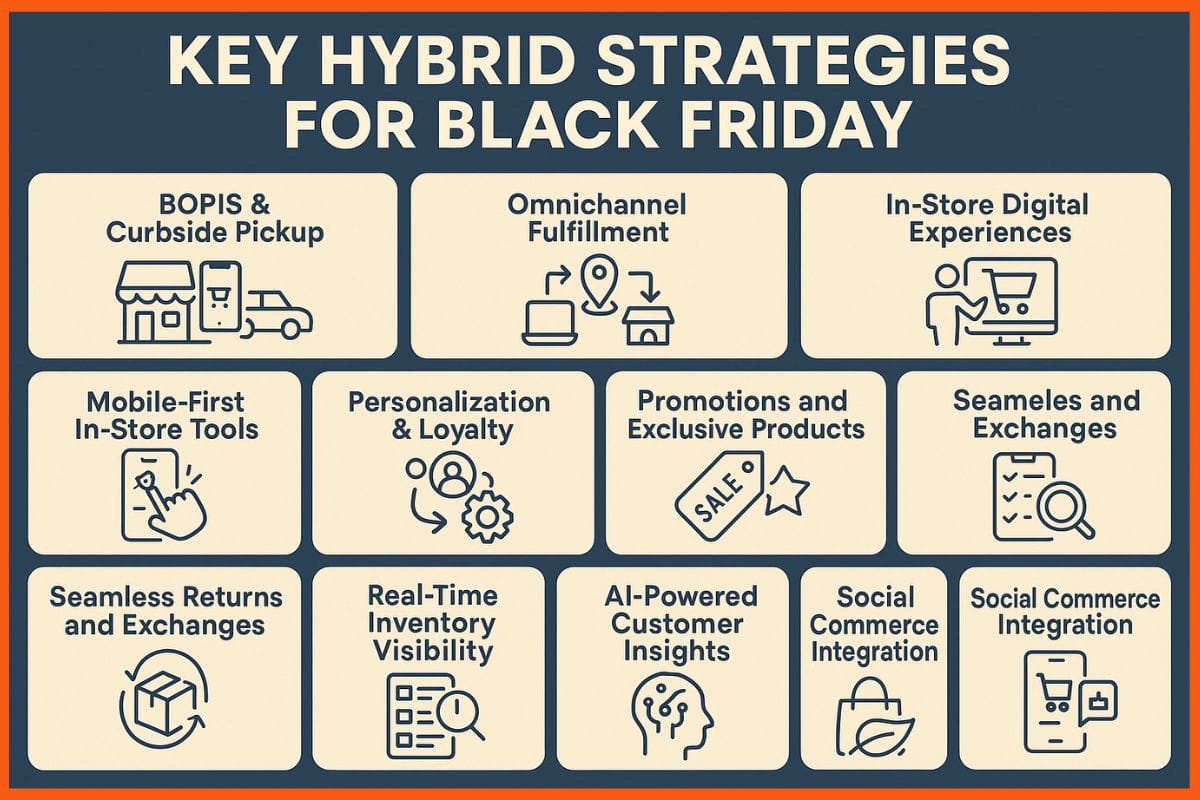
Retailers are using many hybrid tactics to seize this trend. Key strategies include:
BOPIS & Curbside Pickup
Investing in buy-online-pickup curbside boosts foot traffic and convenience. For Black Friday 2023, 25% of all orders used BOPIS. Since 65% of Americans use BOPIS monthly, expect even more pick-up orders in 2025. Stores should streamline pickup lanes and staff to handle surges.
Omnichannel Fulfillment
Turn each store into a micro-warehouse. Synchronize inventory so a shopper can reserve an item online and find it in a nearby store. As Position Imaging notes, local inventory ads and data-driven stock help move products from local stores to shoppers faster.
Same-day delivery partnerships (like JCPenney + DoorDash) or “ship-from-store” services keep shoppers from waiting and reduce shipping costs.
In-Store Digital Experiences
Use technology to help make store visits fun. Virtual fitting rooms and AR mirrors allow customers to try on products virtually, enhancing confidence. Retailers are incorporating AR apps for virtual try-ons, such as John Lewis and Macy's.
Retailers see a financial benefit: 61% of shoppers say they would prefer to shop with stores that offer AR, and 66% say they would like stores to provide more AR experiences. Smart mirrors (e.g., Rebecca Minkoff's interactive dressing rooms) even allow customers to request new sizes/lighting options to improve service and reduce returns.
Mobile-First In-Store Tools
Mobile phones bridge online and offline. In 2024, over 54% of Black Friday sales were on mobile devices. Equip store teams with tablets or apps for quick checkout anywhere in the store.
Use QR codes and mobile wallets for frictionless payment. For example, app-based coupons and mobile shopping lists help shoppers plan visits. Push notifications are capable of sending exclusive in-house deals to nearby customers.
The fact that you support in-store scanning and payments in your mobile application is important.
Vivek Dev Jacob
Personalization & Loyalty
Leverage data to reward frequent shoppers. Personalized email or app offers should be redeemable in-store and online. Loyalty programs that span both channels keep customers engaged. Use purchase history to suggest in-store add-on deals on Black Friday.
Promotions and Exclusive Products
To draw crowds, offer in-store-only deals or early access products. For example, some stores release exclusive items (like collectible editions or early access to new products) only on Black Friday morning. Shoppers then come in person for the excitement. Loud promotions across channels, email, social, and signage can highlight these exclusives.
Seamless Returns and Exchanges
In other words, allow end users to easily return a purchase made online at any store, and vice versa. A streamlined returns desk keeps customers happy and promotes future purchases. Emailing a receipt to each customer (so that they can view it on their mobile device) and educating your customer service staff on returns policies builds trust
Real-Time Inventory Visibility
Customers hate it when products are out of stock once they get there. Providing online real-time stock information is a way to build trust. Other resources, such as Google's Local Inventory Ads and real-time inventory dashboards, keep customers in the loop.
Stores with real-time availability have a higher conversion rate and are less likely to see customer complaints.
AI-Powered Customer Insights
AI is now shaping hybrid retail strategy. Retailers use predictive analytics to forecast product demand, track footfall, and push hyper-personalized offers. AI chatbots on apps and in-store kiosks answer questions instantly, improving the overall experience.
AI-driven insights also help retailers adjust staffing and inventory dynamically during Black Friday rush hours.
Vivek Dev Jacob
Experiential Pop-Up Zones
Pop-up zones create buzz and urgency. Temporary setups in malls or within flagship stores offering mini-experiences or product demos can attract new shoppers. Nike's 'House of Innovation' pop-ups, for instance, allow people to customise shoes while in the store.
This combines experiential shopping with digital interactivity and leads to social media engagement.
Green and Sustainable Shopping Initiatives
Sustainability is becoming a major concern for both Gen Z and Millennial shoppers. Brands that incorporate green practices into their Black Friday strategies are set apart. Provide paperless receipt printing, shopping bags, and recycling programs for old products. Sustainability in-store experiences touch the hearts of new generation shoppers.
Social Commerce Integration
Social platforms are now majorly affecting almost every purchase. Create shoppable social feeds in stores, QR codes to TikTok videos, Instagram Reels, or influencer demos. This makes window shopping into a multimedia shareable experience. Retailers using social proof during live events have reported up to 30% higher in-store engagement.
Each of these strategies works together. A shopper might see a deal online, reserve an item for pickup, then scan a QR code in-store to learn about a bundle offer. By blending channels, retailers capture the full customer journey.
How Retailers Can Measure Their Hybrid Retail Performance
Launching multiple shopping channels is not enough. Retailers must also measure how well these channels work together.
Black Friday provides an opportunity to understand customer preferences, identify operational gaps, and improve future campaigns.
The following table highlights important performance indicators retailers should track.
KPI | What it measures | Why it matters |
|---|---|---|
BOPIS adoption rate | Percentage of orders placed online and collected in stores | Measures demand for pickup services |
Omnichannel conversion rate | Purchases made across connected shopping channels | Shows how effectively channels drive sales |
Store footfall | Number of customers visiting physical stores | Helps evaluate in-store campaign performance |
Inventory accuracy | Difference between recorded and actual stock | Prevents cancelled orders and stockouts |
Average order value (AOV) | Average amount spent per order | Measures promotional effectiveness |
Customer retention rate | Percentage of customers who return to shop | Shows long-term customer loyalty |
Return rate | Percentage of purchased products returned | Helps identify product and fulfillment issues |
Click-and-collect time | Time taken to prepare and hand over pickup orders | Measures pickup efficiency |
Retailers should compare these metrics across online and offline channels rather than evaluating each channel separately. This provides a clearer picture of the entire customer journey.
Conclusion
Black Friday is no longer just about offering attractive discounts. It is about creating a shopping experience that connects digital convenience with physical store experiences.
The 2025 shopping figures show that both channels continue to attract millions of consumers. Meanwhile, 2026 retail trends point towards greater adoption of AI, predictive inventory management, personalized recommendations, and digital payments.
Retailers that invest in connected technology, flexible fulfillment options, and consistent customer experiences will be better positioned to compete during Black Friday and throughout the holiday shopping season.
The future of Black Friday is omnichannel. Customers should be able to discover products online, purchase them through their preferred channel, collect them from a nearby store, and return them without unnecessary complications.
Vidhi Punamiya
FAQs
How does BOPIS help boost sales during Black Friday?
BOPIS (Buy Online, Pick Up In Store) combines online convenience with in-store speed. In 2023, 25% of all Black Friday orders used BOPIS, and with 65% of shoppers using it monthly, it’s a must for 2025.
How are retailers using AI to enhance hybrid shopping?
Retailers use AI analytics to predict demand, personalize offers, optimize staffing, and track real-time footfall. AI-powered chatbots and in-store kiosks also answer queries instantly, creating smoother hybrid experiences during the busy Black Friday period.
When is Black Friday 2026?
Black Friday 2026 falls on Friday, November 27, 2026. Cyber Monday will be on November 30, 2026.