Best AI Tools for Ad Budget Automation
AI ad budget automation tools help marketers monitor campaigns, adjust budgets, optimize bids, reduce wasted spend, and manage advertising across multiple channels.

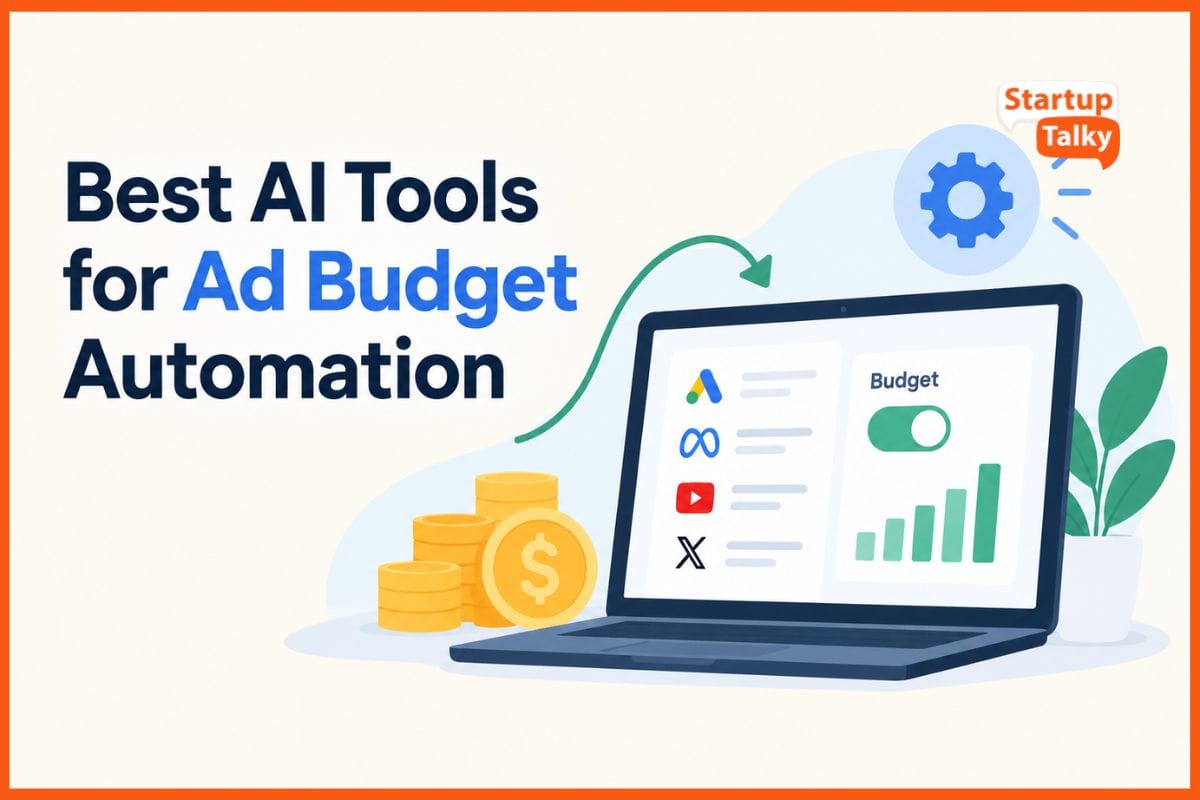
AI tools for ad budget automation help teams spend smarter and move faster. They track campaign data, spot trends, and shift money toward ads that drive better results. Instead of checking reports all day, marketers can set clear goals and let the system adjust bids, budgets, and pacing in real time.
This reduces wasted spend and helps campaigns respond to changes in demand. It also gives small teams more control across many channels.
With better data and faster decisions, businesses can improve returns, protect budgets, and focus more time on creative work and growth.
AI Ad Budget Automation Tools: Quick Comparison
The table below compares the AI tools covered in this article based on what they are best for, their key features, pricing level, and main drawbacks.
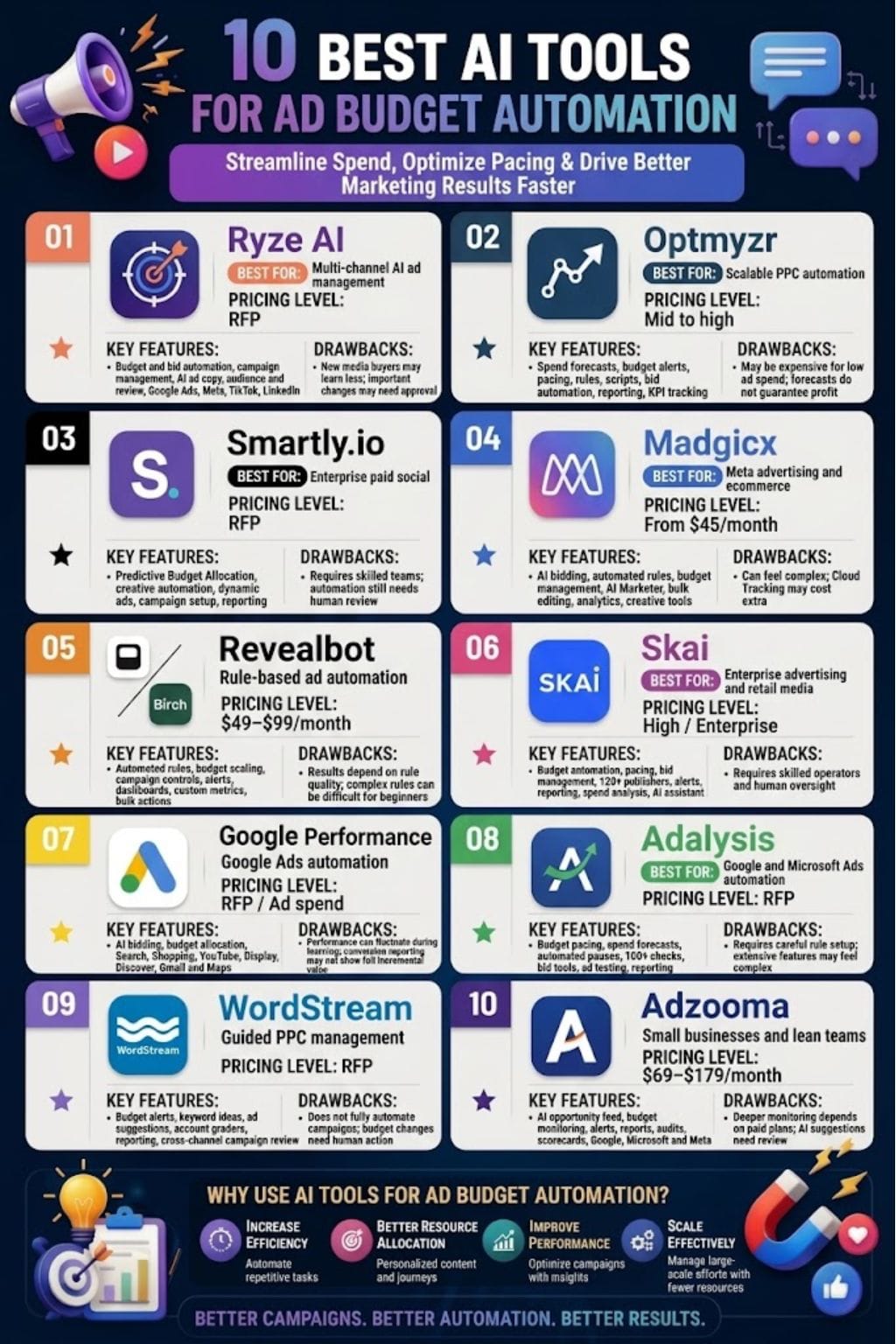
| AI Ad Budget Automation Tool | Best For | Key Features | Pricing Level | Drawbacks |
|---|---|---|---|---|
| Ryze AI | Multi-channel AI ad management | Budget and bid automation, campaign management, AI ad copy, audience and creative review, Google Ads, Meta, TikTok, LinkedIn | RFP | New media buyers may learn less; important changes may need approval |
| Optmyzr | Scalable PPC automation | Spend forecasts, budget alerts, pacing, rules, scripts, bid automation, reporting, KPI tracking | Mid to high | May be expensive for low ad spend; forecasts do not guarantee profit |
| Smartly.io | Enterprise paid social | Predictive Budget Allocation, creative automation, dynamic ads, campaign setup, reporting | RFP | Requires skilled teams; automation still needs human review |
| Madgicx | Meta advertising and ecommerce | AI bidding, automated rules, budget management, AI Marketer, bulk editing, analytics, creative tools | From $45/month | Can feel complex; Cloud Tracking may cost extra |
| Revealbot / Bïrch | Rule-based ad automation | Automated rules, budget scaling, campaign controls, alerts, dashboards, custom metrics, bulk actions | $49–$99/month | Results depend on rule quality; complex rules can be difficult for beginners |
| Skai | Enterprise advertising and retail media | Budget automation, pacing, bid management, 120+ publishers, alerts, reporting, spend analysis, AI assistant | High / Enterprise | Requires skilled operators and human oversight |
| Google Performance Max | Google Ads automation | AI bidding, budget allocation, Search, Shopping, YouTube, Display, Discover, Gmail and Maps | RFP / Ad spend | Performance can fluctuate during learning; conversion reporting may not show full incremental value |
| Adalysis | Google and Microsoft Ads automation | Budget pacing, spend forecasts, automated pauses, 100+ checks, bid tools, ad testing, reporting | RFP | Requires careful rule setup; extensive features may feel complex |
| WordStream | Guided PPC management | Budget alerts, keyword ideas, ad suggestions, account graders, reporting, cross-channel campaign review | RFP | Does not fully automate campaigns; budget changes need human action |
| Adzooma | Small businesses and lean teams | AI opportunity feed, budget monitoring, alerts, reports, audits, scorecards, Google, Microsoft and Meta | $69–$179/month | Deeper monitoring depends on paid plans; AI suggestions need review |
Ryze AI
Ryze AI is an AI-powered ad management platform that helps teams manage and improve paid campaigns across major advertising channels. It continuously reviews ad accounts and identifies areas where performance can be improved, instead of relying only on scheduled reports.
The platform can adjust budgets and bids based on campaign results, build campaigns, and draft ad copy. It supports Google Ads, Meta, TikTok, and LinkedIn Ads.
Ryze AI also reviews audiences and creative assets and can suggest or apply changes. Important budget and bid changes can remain subject to approval. Teams can also receive regular campaign updates.
Pros
- Teams can keep control over spend changes while using AI for the daily work
- One tool can manage campaigns across several large ad networks
- It monitors and optimizes accounts 24/7, which may reduce manual checks
Cons
- New media buyers may learn less if the tool does most routine work
- Human review adds safety, but urgent changes may wait for sign-off
Pricing
| Plan | Pricing |
|---|---|
| Request for Pricing (RFP) | Contact Sales |
Optmyzr
Optmyzr is an AI-assisted PPC automation platform built for teams managing Google, Microsoft, Amazon, and other paid advertising accounts. It uses past spending, seasonality, and recent budget changes to forecast spend, track pacing, and spot potential risks.
Teams can automate budget and bid changes, set rules, and manage campaigns across multiple accounts and platforms. Its features include spend forecasts, budget alerts, overspend monitoring, reporting, KPI tracking, change history, and no-code workflows.
The “Reach Target Monthly Spend” tool helps adjust campaign budgets to meet spending goals. Optmyzr also provides optimization suggestions, audits, and one-click actions to simplify daily PPC management.
Pros
- Deep rule and script options support custom processes without requiring coding
- Built for scale, with multi-account reporting and budget tools that suit agencies
- Human control remains central: users can set rules and review performance rather than trust a black-box system
Cons
- Its cost can be hard to justify for low ad spend
- Forecasts guide spend pacing, but they do not guarantee better conversion quality or profit
Pricing
| Plan | Pricing |
|---|---|
| Essentials | $164/month |
| Premium | $214/month |
| Enterprise | Contact Sales |
Smartly.io
Smartly.io is an enterprise AI platform that helps brands and agencies manage paid social advertising at scale.
It automates key tasks such as budget allocation, creative production, campaign setup, and reporting across platforms like Meta, TikTok, Snapchat, and Pinterest. Its Predictive Budget Allocation helps move ad spend toward campaigns that are more likely to perform well.
Teams can also create dynamic ads using product feeds, test different creative versions, and automate repetitive workflows. By bringing campaign data and performance insights into one platform, Smartly.io helps reduce manual work and improve control.
Pros
- Dynamic templates help teams produce many personalized ad variants from catalog data
- Supports several major social ad channels from a shared workflow
- Strong fit for large teams managing many campaigns and markets
Cons
- Setup, feed design, and rules need skilled campaign and creative teams
- Automation still needs human review; weak creative or poor conversion data can limit results
Pricing
| Plan | Pricing |
|---|---|
| Request for Pricing (RFP) | Contact Sales |
 Rishabh Rathi
Madgicx
Madgicx is an AI-powered advertising platform built mainly for Meta ads. It helps e-commerce brands and agencies manage ad budgets, track results, and make faster decisions.
The platform uses automated rules, AI bidding, and daily account checks to improve ad performance. Its AI Marketer can flag wasted spend, find growth opportunities, and suggest actions. Ads Manager 2.0 also makes it easier to edit campaigns in bulk, view trends, and track performance.
Users can create rules to pause weak ads, control spending, and scale ads that perform well. Madgicx also brings creative tools, analytics, targeting, and reporting.
Pros
- AI Marketer reviews the account daily and offers actionable suggestions rather than only static reports
- Automated rules can cut spend on poor performers and raise it for stronger campaigns
- Combines Meta ad management, bidding, targeting, creative work, and analytics in one tool
Cons
- The wide feature set may feel complex for a new advertiser
- Cloud Tracking may cost extra
Pricing
| Plan | Pricing |
|---|---|
| Monthly Plan | $45/month |
Revealbot / Bïrch
Revealbot, now known as Bïrch, is a rule-based advertising automation tool that helps teams manage paid ad budgets with less manual work. It can monitor campaigns and automatically pause, scale, launch, or adjust them based on metrics such as spend, CPA, ROAS, and conversions.
The platform also offers ready-made automation strategies for common tasks, along with bulk editing for campaigns, ad sets, and ads. Teams can use it for cross-account reporting, scheduled reports, custom metrics, and audience management.
Bïrch also connects with tools like Google Sheets, AppsFlyer, Hyros, Slack, and email. It is mainly built for Meta advertisers..
Pros
- Manage repeatable processes across several ad accounts and workspaces
- Combine automated alerts, dashboards, and custom metrics in one workflow
- Bulk actions reduce time spent on routine campaign check
Cons
- Its main strength is configurable rules, so results depend on sound strategy and threshold settings
- Complex rule logic can be hard for new advertisers to design and test
Pricing
| Plan | Pricing |
|---|---|
| Essentials | $49/month |
| Pro | $99/month |
| Enterprise | Contact Sales |
Skai
Skai is an enterprise advertising platform that uses AI to help brands and agencies manage campaigns across paid search, social, retail media, and more than 120 publishers. It brings campaign management into one place, making it easier to track budgets, adjust bids, and respond to performance changes.
Its AI tools can spot trends, identify strong campaign elements, and suggest where to move ad spend. Teams can also set rules and automated actions based on different conditions.
Other features include alerts, audits, reporting, and spend analysis. Skai also offers a generative AI assistant that helps users with campaign data.
Pros
- Enterprise-grade budget automation: supports pacing, underspend control, and allocation decisions
- Broad publisher reach: useful for teams with complex retail-media and marketplace spend
- Includes dedicated client-success support and Celeste AI in published tiers
Cons
- Setup, rules, and governance can need skilled operators
- Automation still needs human review to protect brand, margin, and campaign goals
Pricing
| Plan | Pricing |
|---|---|
| Standard | $114,000/year |
| Advanced | $276,000/year |
| Enterprise | $504,000/year |
| Enterprise Premier | $756,000/year |
Vivek Dev Jacob
Google Performance Max
Google Performance Max (PMax) is a Google Ads campaign type that uses AI to manage ad campaigns across Search, Shopping, YouTube, Display, Discover, Gmail, and Maps.
You provide a goal, budget, audience signals, conversion data, and creative assets, while Google handles bidding, ad creation, and budget allocation. It aims to improve results by shifting spend toward channels and placements that perform better.
PMax works best with accurate conversion tracking and enough data to learn. It can save time, but advertisers still need to review campaign goals, creative assets, search terms, brand safety, and overall performance.
Pros
- It can find potential buyers wherever they use Google properties
- Spend can shift as auction conditions and conversion chances change
- Many asset combinations can be tested without building each ad by hand
Cons
- Results may fluctuate while the system gathers enough signals
- Reported conversions may not always show the full incremental value of the campaign
Pricing
| Plan | Pricing |
|---|---|
| Campaign-based | Ad spend applies |
| Software fee | No separate tool subscription |
Adalysis
Adalysis is a PPC automation platform for Google Ads and Microsoft Ads. It helps teams control ad budgets with real-time pacing, spend forecasts, daily budget changes, rollovers, and automatic campaign pauses or restarts.
Its rule engine runs 100+ daily account checks and can trigger alerts or actions. It also supports bid tools, Quality Score analysis, automated ad tests, search-term insights, dashboards, and white-label reports.
Users retain control by setting the rules and approval level for changes. It best suits agencies and in-house teams that manage many PPC accounts and need tighter budget control at scale.
Pros
- 100+ editable daily audit checks find account-health and performance issues early
- Automated ad testing can identify weak ads and replace losing variants
- Unlimited Google Ads accounts, Microsoft Ads accounts, and users are included
Cons
- Automation still needs careful rule setup and oversight; poor targets can lead to poor changes
- The extensive toolset may feel complex for a small advertiser with one simple account
Pricing
| Plan | Pricing |
|---|---|
| Request for Pricing (RFP) | Contact Sales |
WordStream
WordStream is a PPC management platform from LocaliQ that helps small businesses review and improve Google Ads, Microsoft Ads, and Meta campaigns.
Its automation is mainly guided, not fully autonomous: it finds issues and suggests actions, while you review and apply changes. Key tools include the 20-Minute Work Week task list, account performance graders, keyword ideas, bid and budget alerts, ad-copy suggestions, and cross-channel reporting.
It suits teams that want clear PPC guidance without running deep manual audits. It is less fit for firms that need real-time AI budget shifts across campaigns.
Pros
- Free Google Ads and Facebook Ads graders offer quick account health checks
- Combines keyword, ad, bid, budget, and reporting work in one place
- Supports Google, Microsoft, and Meta campaign review
Cons
- It suggests many changes; it does not fully run campaigns on its own
- Budget moves across campaigns still need human review and action
Pricing
| Plan | Pricing |
|---|---|
| Request for Pricing (RFP) | Contact Sales |
Vivek Dev Jacob
Adzooma
Adzooma is an AI-assisted PPC management platform that helps teams manage Google, Microsoft, and Meta ads from one place. It makes it easier to track budgets, monitor campaign performance, and spot wasted spend before it becomes a bigger issue.
Its AI-powered opportunity feed suggests ways to improve campaigns and allows users to take action with a few clicks. Teams can also set automated alerts through email or Slack and create performance reports, audits, and scorecards.
Adzooma supports multiple accounts, making it useful for small businesses and agencies that manage several ad campaigns and want to reduce manual work.
Pros
- Single view of three major ad networks, which can reduce tab switching
- Budget pacing focuses on a common ad-ops risk: overspending mid-cycle
- Simple reports and alerting make it useful for lean teams without deep PPC expertise
Cons
- Deeper monitoring depends on paid plans with weekly or daily report cycles
- AI suggestions still need human review; a poor fit for a brand or campaign goal can waste spend
Pricing
| Plan | Pricing |
|---|---|
| Silver | $69/month |
| Gold | $179/month |
How to Choose an AI Tool for Ad Budget Automation
Choosing an AI ad budget automation tool depends on your advertising channels, campaign size, level of automation, and how much control your team wants to keep.
1. Check the advertising platforms you use
Start with your existing channels. Some tools focus heavily on Meta, while others are built for Google Ads, Microsoft Ads, retail media, or multiple platforms.
If your team runs campaigns across several networks, cross-channel support can reduce the need to manage budgets in separate dashboards.
2. Decide how much automation you need
Not every tool works in the same way.
Some platforms mainly provide recommendations and alerts. Others use rules to automatically make changes. AI-powered platforms can also monitor accounts and make optimization decisions based on campaign data.
Choose an automation level that matches your team's experience and approval requirements.
3. Look at budget controls
Budget automation should give you control over how much money can move and when.
Look for features such as:
- Budget pacing
- Spend forecasts
- Overspend alerts
- Automated budget changes
- Bid adjustments
- Spending limits
- Approval workflows
- Change history
These controls can make automated budget changes easier to monitor.
4. Consider your campaign volume
A small business running a few campaigns may not need an enterprise platform.
Agencies and larger marketing teams managing multiple accounts can benefit more from bulk editing, multi-account reporting, automated rules, dashboards, and cross-platform management.
5. Review pricing against ad spend
The subscription cost is only one part of the total cost.
Some tools charge a fixed monthly fee, while others use custom pricing or pricing linked to advertising spend. Compare the software cost with the amount of manual work it can reduce and the level of automation your team actually needs.
6. Keep human oversight
AI can process campaign data quickly, but marketers still need to set goals, budgets, rules, and guardrails.
Human review is particularly important when campaigns have strict brand, profitability, audience, or compliance requirements.
Benefits of AI Ad Budget Automation
AI-powered budget automation can help marketers manage campaigns with less manual work.
Some of the main benefits include:
- Faster budget decisions: AI can review campaign signals and respond to performance changes quickly.
- Less repetitive work: Automated rules can handle routine budget, bid, and campaign actions.
- Better budget visibility: Forecasts, alerts, and dashboards make spending easier to monitor.
- Multi-channel management: Some tools bring several advertising platforms into one workflow.
- Scalable campaign management: Automation can help teams manage more accounts without checking every campaign manually.
- More time for creative work: Reducing repetitive campaign tasks gives marketers more time for strategy, testing, and creative development.
What to Watch Before Automating Ad Budgets
Automation works best when the underlying campaign data is reliable.
Before allowing an AI tool to make budget changes, teams should review conversion tracking, campaign goals, spending limits, attribution settings, and the rules used to trigger automated actions.
It is also useful to start with approval-based changes before moving to more autonomous workflows. This gives marketers time to understand how the system reacts to different campaign conditions.
Final Thoughts
AI-powered budget automation turns advertising from a slow, manual task into a fast, focused growth system. It reads performance signals, shifts spend toward stronger results, and cuts waste before it grows.
Teams gain more time to shape strategy, test bold ideas, and understand their audience. The best results still need clear goals, clean data, and human review. Automation does not replace good judgment; it makes that judgment more powerful.
Used with care, it helps every budget work harder, respond faster, and deliver more value. In a crowded market, this speed and control can turn ad spend into lasting business.
FAQs
What are AI tools for ad budget automation?
AI tools for ad budget automation help marketers monitor campaign performance and automate tasks such as budget allocation, bid adjustments, pacing, and spend control.
How do AI tools automate ad budgets?
These tools analyze campaign data, performance signals, spending patterns, and conversion results to adjust budgets and bids based on predefined goals, rules, or AI-driven recommendations.
What are the benefits of AI ad budget automation?
AI ad budget automation can reduce manual work, improve budget control, identify wasted spend, respond to performance changes faster, and help teams manage campaigns across multiple advertising platforms.
Which advertising platforms can AI budget automation tools manage?
The platforms vary by tool. Common options include Google Ads, Meta, Microsoft Ads, TikTok, LinkedIn, Pinterest, Snapchat, and retail media networks.
Does AI ad budget automation replace human marketers?
No. AI can automate repetitive campaign tasks and make recommendations, but marketers still need to set goals, budgets, rules, and guardrails and review important changes.